Cash application straight from the
horse's mouth
Lunos cash application is the AI agent that auto-matches the payments that are clear, asks your customer about the ones that aren't and syncs clean journal entries straight to your ERP. The matching gets done. The books stay clean. Your team stops playing detective.

Your AR aging report should reflect reality, not your last round of matching.

Auto-matches clear payments using the payer's history, payment promises, Lunos-initiated actions and bank and payments data

When it's unsure, Lunos asks the payer directly - delivered with a delightful thank-you for paying, not a cold email

Syncs clean journal entries back to NetSuite, Xero, QuickBooks and any many more ERPs
How it works
Lunos cash application asks instead of guesses. Three moves, in order.
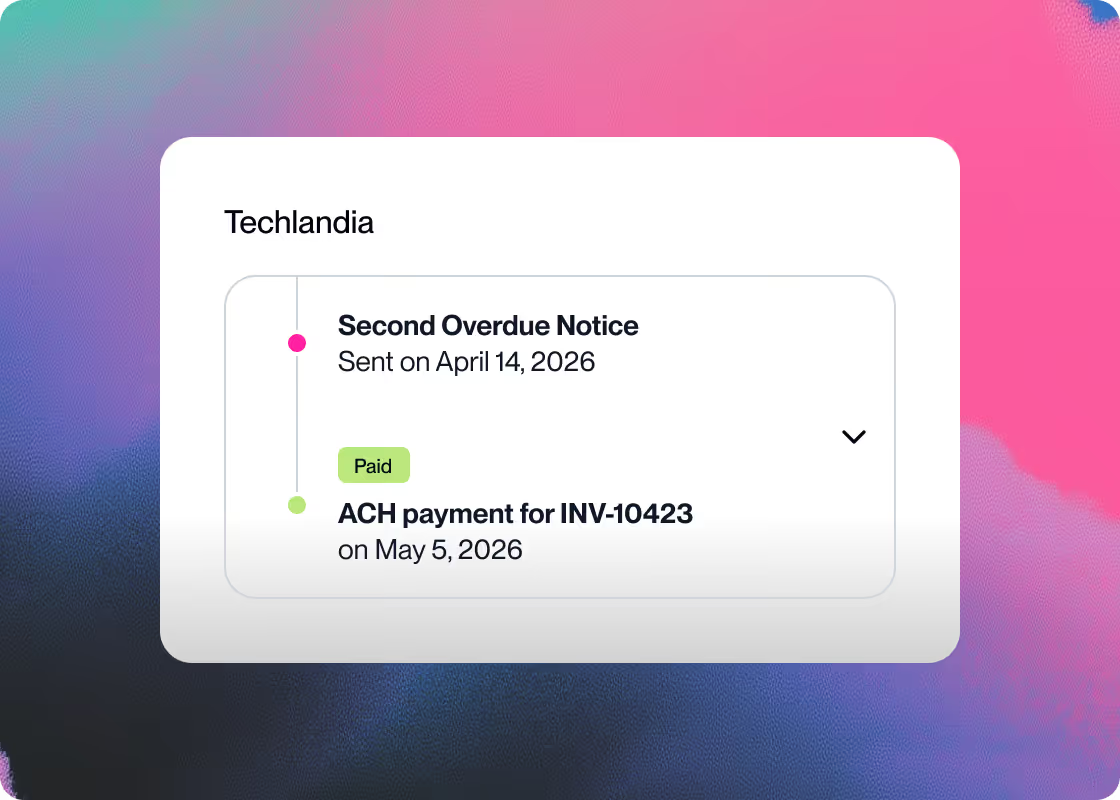
Solving your Cash App pains
Reconciliation is a manual grind that scales with every customer you add.
Your month-end close is held hostage
by the unmatched pile.
Legacy cash app tools guess. When they guess wrong, trust collapses and the tool gets turned off.


Frequently asked questions
Auto-matching for Lunos-initiated payments is live. VBAN matching is partially live (payments are attributed to the payer; full write-back, partial-payment handling and unmatched-payment workflows are rolling out). ERP journal sync for NetSuite, Xero and QuickBooks, the ask-the-payer flow for ambiguous matches and reconciliation gap detection are rolling out through 2026. Book a demo and we'll show you exactly what's working today against your payment mix.
Legacy tools guess. They use machine learning to assign payments to the most likely invoice and hope the match is right. Lunos auto-matches where it's certain, then asks the payer directly when it isn't. Your customer knows which invoice they paid. It takes them ten seconds to tell us. Guessing tools get turned off once they're wrong a few times. Asking tools keep getting used.
No. Cash application and reconciliation work standalone. If you're already using Lunos for Collections, the two share context: collection status reflects live payment data, and reminders stop the moment a match lands.
Yes, but you'll want to turn theirs off. ERPs like NetSuite have native auto-matching. Running both at once causes double application. We flag this during onboarding
Lunos-initiated payments, VBAN payments, static bank and online ACH via remittance parsing, and check payments where lockbox data is available. Matching quality depends on the payment type. VBANs and Lunos-initiated payments are near-perfect. Static bank relies on remittance advice.
We are constantly expanding our library of integrations. Please get in touch if you would like to discuss a particular platform.
AI cash application matches incoming payments to the right invoices and posts clean entries to your ERP. The approach that sets a good one apart is simple: when it isn't sure of a match, it asks rather than guesses.
Lunos works it in three moves. Payments it can match with confidence (one it initiated itself, one sent to a customer's unique VBAN, an arriving remittance it can parse) it matches with no human involved. When a payment is ambiguous (a partial amount, several invoices paid as one, a figure that's close but not exact) it goes straight to the payer and asks which invoices they meant to cover. That question rides along with a thank-you for paying rather than a cold email, and takes the customer about ten seconds. Once the match is confirmed, Lunos writes the journal entry back in the format your accounting team expects, with partials and fees handled.
What you're left with is an aging report that reflects what actually happened, rather than whatever someone managed to key in before the books had to close.
Traditional, ML-based cash application software guesses. It assigns each payment to the statistically likeliest invoice and hopes the match holds. That's fine when remittance is clear and risky when it isn't. One bad match, say a payment applied to the wrong invoice and caught two months later after you've chased a customer for money they already paid, and your team quietly stops trusting the tool. From then on they re-check every match by hand, so you're paying for software to do work you're still doing yourself.
Lunos is built the other way around. It auto-matches only where it's genuinely certain and asks the payer everywhere else, which means it never silently corrupts your ledger to keep its automation rate up. That's the difference between a tool that gets switched off after a few bad calls and one that stays in daily use.
Ready to tame the wilds of your AR ledger?


