Round up your payment mix. Every payer on the right rail.
Lunos payment orchestration is the AI partner that actively runs your payment mix. It decides which method each payer should be on, onboards new payers onto the best rail for them and migrates existing ones off the slow, costly and unreliable options. Your payment mix, finally managed like the strategic lever it is.
Book a demo

Your payment mix is a CFO-level lever. Nobody's pulling it. Lunos does.

Lunos picks the right method for each payer and moves them onto it, rather than accepting whatever they picked years ago

Online ACH via Plaid, VBAN, Direct Debit, recurring and one-off card, check

Migrates late payers and static-bank pushers toward autopay, automatically, without your team running a campaign
Solving your Payment Orchestration pains
Pain
How Lunos solves it
You're accepting whatever payment method your customer picked. That's not a mix. That's a legacy.
Most B2B companies don't choose their payment mix. They inherit it. Whatever method a customer picked at signup three years ago is still the method they're using today, whether or not it's the right one for either of you. Static bank for the payer who now pays late every month. One-off card for the payer who could be on autopay. Check for the payer who would happily authorize a Direct Debit if anyone asked. Passive acceptance is the default, and it costs you DSO, reconciliation time and margin every single month.
Your payment mix is a CFO-level lever. Nobody's pulling it.
The mix of methods your customers pay on drives DSO, cost of acceptance, failure rates, reconciliation load and cash predictability. Every CFO knows this in theory. In practice, nobody owns the mix. The AR team chases whoever's late. The finance ops team handles whatever breaks. The payment processor takes whatever comes in. No human is sitting on top of the portfolio deciding who should be on what and making it happen. So the lever just sits there.
Your best payers are on autopay. Your worst ones aren't. You're not doing anything about it.
You know which payers are reliable. You know which ones pay late every month. You know DD and recurring card fix this. But actually migrating 15, 50, 200 payers from static bank to autopay means an outreach campaign, a setup flow, a tracking sheet and a person to run it. So it never happens. The late payers stay late. Forever.
What's coming
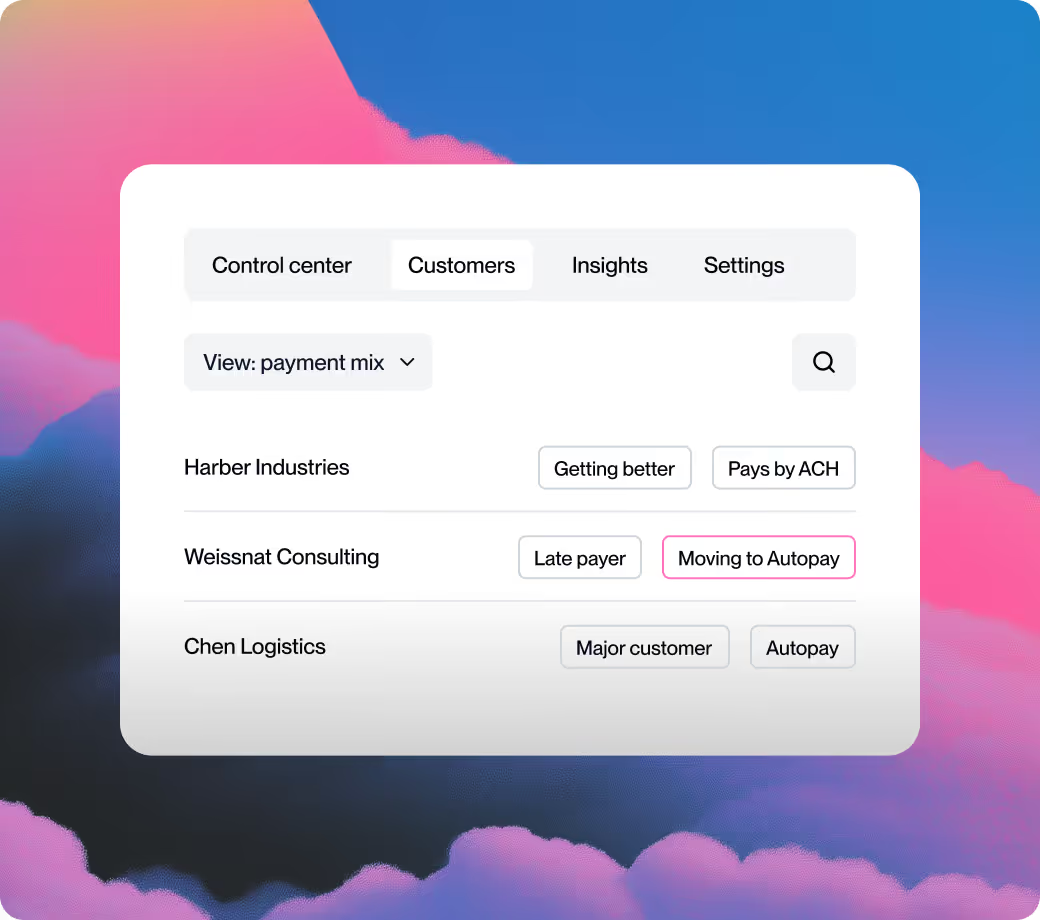
Lunos payment orchestration actively runs your payment mix. Every new payer gets onboarded onto the right method for their size, timing and reliability, not whatever they happen to pick. Every existing payer gets scored against the methods available, and the ones on slow, costly or unreliable rails get migrated. Lunos runs the outreach, runs the setup, handles the failures and keeps the mix optimised as the portfolio changes. You decide the policy. Lunos moves the portfolio to match it. Collections and payments live in the same agent, so the right hand finally knows what the left hand is doing.
Frequently asked questions
When is this launching?
Do I need Lunos collections to use payment orchestration?
Which payment methods will be supported?
How does method migration actually work?
Who decides which method a payer ends up on?
What about payers who don't want to switch?
Can I influence which methods ship first?
What integrations will be supported?
What does an AI payment orchestration agent do?
How is AI payment orchestration different from traditional payment processing?
Put your payment mix under active management
Early access customers shape the method roadmap, get hands-on migration support and priority rollout as each payment method goes live.
