

Summarize:


The 13 Best AI Agents for Finance Teams Compared (2026)
Finance operations have a reputation for being tedious and, oftentimes, complex. The best AI agents for finance make it easier. Instead of hiring more analysts or AR specialists, teams are using AI to handle repetitive tasks, including invoice follow-ups, anomaly detection, forecasting, and expense reviews.


Quick Summary
Finance operations have a reputation for being tedious and, oftentimes, complex. The best AI agents for finance make it easier. Instead of hiring more analysts or AR specialists, teams are using AI to handle repetitive tasks, including invoice follow-ups, anomaly detection, forecasting, and expense reviews.
If you’re looking for AI agents to ease your work and are in a time crunch, here are the top 3:
Why AI Agents Matter for Finance Teams
Most finance teams don’t have a software problem. They have a time problem.
For example, many accounts receivable (AR) teams spend significant time manually chasing invoices. Financial planning & analysis (FP&A) teams rebuild spreadsheets every month. Controllers spend days reconciling data that should already match.
All that is time that could be better invested in other aspects of moving the organization forward.
This is where AI agents save the day. They help finance teams by:
- Continuously monitoring systems
- Automating repetitive processes
- Adapting based on context (not static rules)
- Escalating exceptions instead of flooding dashboards
In short, they remove the busywork so humans can focus on decisions.
Why Trust Us
At Lunos, we spent years watching finance teams struggle with the same frustrating bottleneck: accounts receivable isn't really a payment problem. It's a communication problem.
We’ve worked with finance teams handling anywhere from 500 to 50,000 invoices per month and understand what real automation looks like. Too many AR automation tools automate reminders but still rely on constant manual follow-up.
So when we compare AI agents for finance, we’re not guessing.
13 Best AI Agents for Finance Teams Ranked and Compared
1. Lunos
Best AI Agent for Accounts Receivable Teams
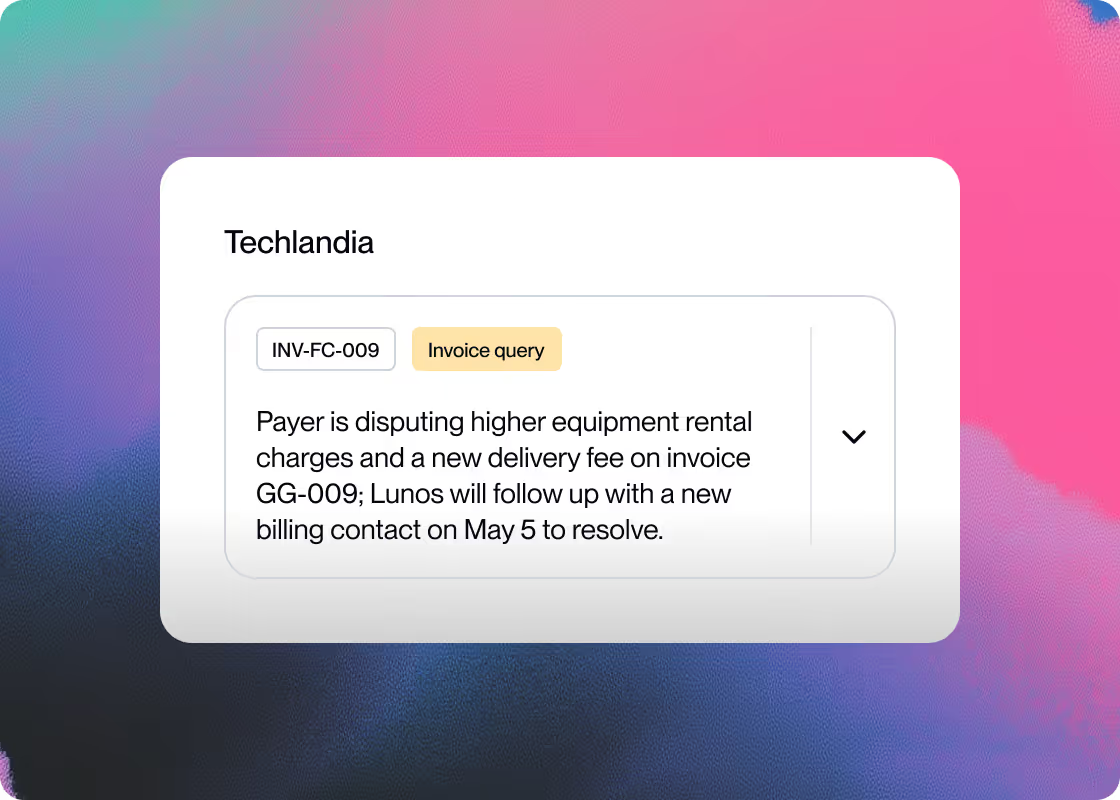
Lunos isn't a single agent. It's a team of them, each one trained on a specific part of the receivables process and working together inside your existing finance stack.
The collections agent runs personalized follow-ups, reads customer replies, and tracks payment commitments in real time. The dispute management agent picks up disputes the moment they arrive, pulls context from across your systems, and pushes them toward resolution.
The cash application agent matches incoming payments against open invoices, asks customers directly when remittance data is ambiguous, and posts clean entries back to your ERP. A payment orchestration agent handles which payment rail each customer should be on, and a portal uploads agent takes care of submitting invoices into AP portals like Coupa and SAP Ariba.
What makes the setup work is shared context. The agents talk to each other, so a dispute flagged by one feeds into how the collections agent times its next outreach, and a payment posted by the cash app agent shuts down any active follow-ups automatically. Your team sits across all of it through three autonomy modes (Monitor, Suggest, Act), set per customer.
Customers typically see a 10-60% reduction in overdue balances within the first month of full usage.
Key features
- A multi-agent suite covering collections, disputes, cash application, payment orchestration, and AP portal uploads
- Two-way conversational AI that reads replies, tracks promises, and adapts outreach to customer behavior
- Per-customer autonomy controls (Monitor, Suggest, Act) so the team stays in charge of every account
- Slack-native workflow with approvals and daily summaries built in
- Native integrations with NetSuite, QuickBooks, Xero, Sage, Salesforce, HubSpot, and major payment providers
- Built-in AR intelligence layer that answers questions like "what changed our DSO last month?" in natural language
Pros
- The only AI agent on this list purpose-built for the full AR workflow, not just one slice of it
- Setup measured in hours, not months
- SOC 2 Type II attested
Cons
- Implementation can be tricky for companies on heavily customized or legacy tech stacks
- Currently focused on AR. AP agents are on the roadmap but not yet live
Best for: B2B finance teams that want a multi-agent system handling the full accounts receivable workflow
Pricing: Team plan starts free at 0.3% of collected revenue. Enterprise pricing custom
2. Vic.ai
Best AI Agent for Accounts Payable Automation

Vic.ai uses machine learning to automatically code invoices, detect anomalies, and flag transactions that don’t look right. Instead of reviewing everything, your team reviews only what matters. And the more invoices Vic.ai processes, the better it gets.
Vic.ai is best suited for mid-market and enterprise environments with high invoice volume, complex vendor relationships, and strict controls. It’s less about speed for startups and more about accuracy and confidence at scale.
Vic.ai doesn’t try to do AR or forecasting. It stays firmly in AP and does that job very well.
Key features
- Automated invoice coding
- Anomaly and fraud detection
- Vendor behavior analysis
- Deep ERP integrations
Pros
- Significantly reduces manual AP review
- Strong anomaly detection that improves over time
- Well-suited to complex environments
Cons
- No AR or collections support
- Enterprise-style pricing and setup
Best for: Accounting teams that want AI-driven AP automation without sacrificing control
Pricing: Custom
3. Datarails
Best AI Agent for FP&A Teams That Live in Excel
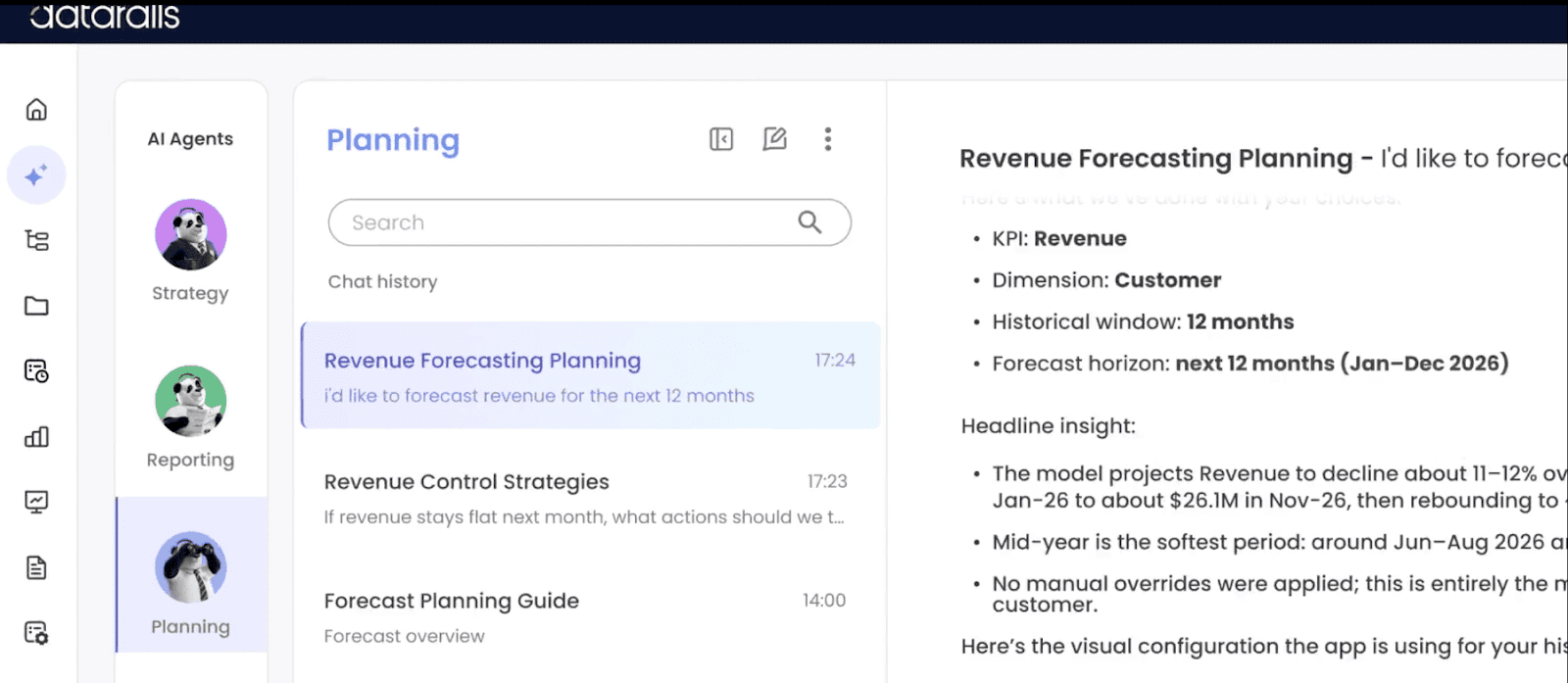
Datarails is a platform that combines Excel workflows with AI-powered insights. It doesn’t replace your spreadsheets but wraps AI-powered automation around them. Its superpower is handling data consolidation, version control, forecasting, and reporting while allowing FP&A teams to keep their existing models and workflows intact.
This approach works especially well for teams with years of institutional knowledge baked into spreadsheets. Because of the Excel-native environment, Datarails reduces the risk of broken formulas, copy-paste errors, and inconsistent assumptions.
Key features
- Excel-native planning and forecasting
- Automated data consolidation
- Scenario modeling and variance analysis
- Board-level reporting
Pros
- Minimal workflow disruption
- Strong FP&A focus
- Faster forecasting cycles
Cons
- Not designed for AR or AP
- Requires disciplined modeling practices
Best for: FP&A teams focused on forecasting, budgeting, and reporting
Pricing: Custom
4. HighRadius
Best AI Agent for Enterprise AR and Credit Operations
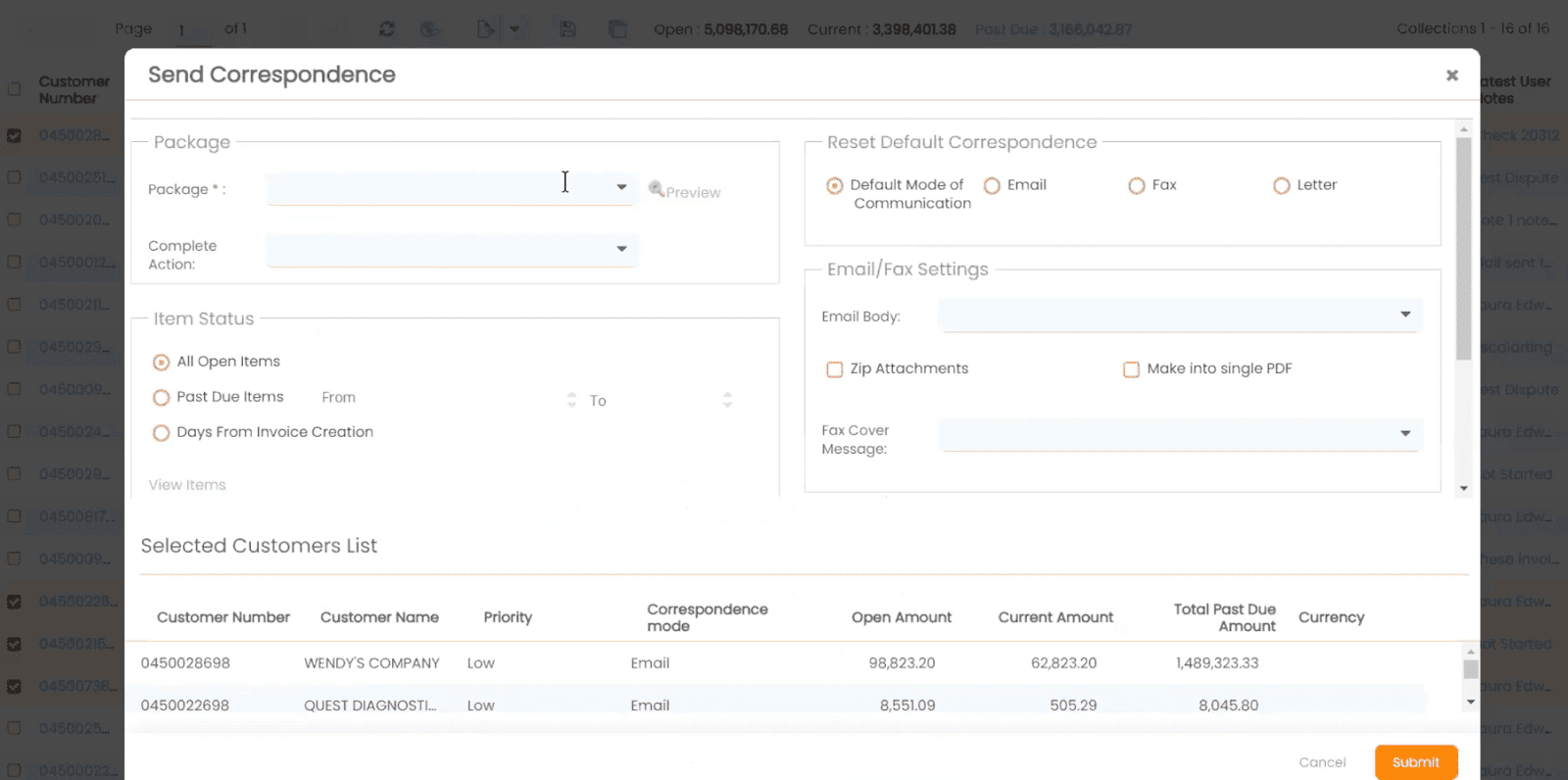
HighRadius is an AI agent designed to support large, global, and complex AR operations. The platform offers a suite of 180+ agents covering collections, credit management, and cash application. The Agent suite will identify high-risk accounts & those that are likely to pay. This will allow larger AR Teams to focus on the accounts that are most important.
However, this power comes at a cost. Implementation is heavy, and the platform can feel like overkill for smaller teams. But for large organizations with serious scale, HighRadius is a proven option.
Key features
- AI-driven collections prioritization
- Credit risk scoring and automation
- Cash application at scale
- Enterprise ERP integrations
Pros
- Extremely powerful for large AR teams
- Deep credit and collections functionality
- Well-established in enterprise finance
Cons
- Long implementation timelines
- Not a fit for small or mid-sized teams
Best for: Enterprise finance teams managing large AR and credit operations
Pricing: Enterprise/custom
5. Planful
Best AI Agent for Finance Leaders and Planning Cycles
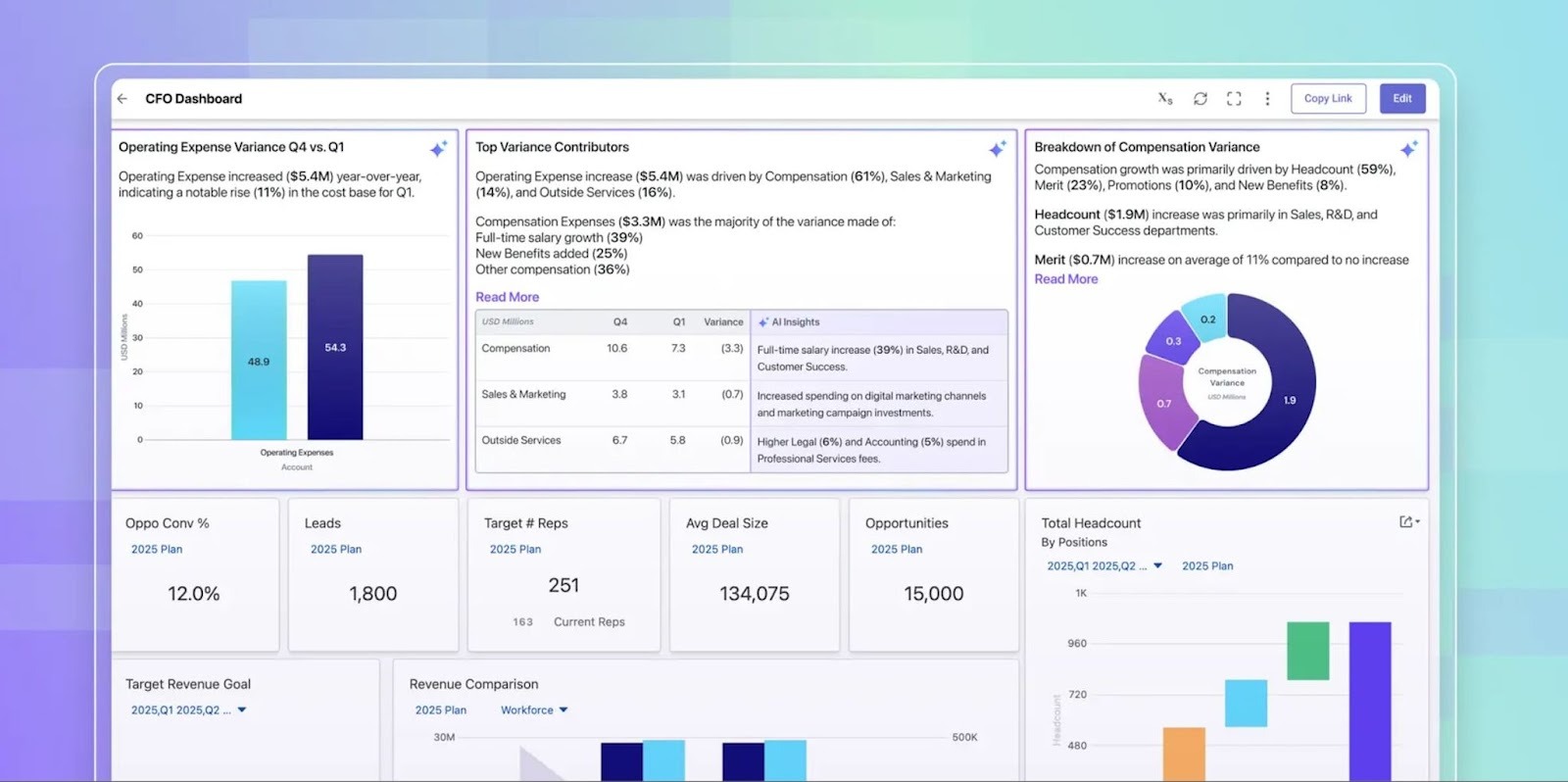
Planful provides AI-powered financial planning and reporting solutions that help automate planning and reporting processes. It also improves transparency among all of the different departmental groups within a company.
The tool brings budgeting, forecasting, consolidation, and reporting into a single platform. As a result, the reliance on disconnected spreadsheets and manual rollups is reduced. For finance leaders, Planful makes it easier to coordinate planning cycles across teams such as sales, operations, and HR.
Key features
- Financial planning and forecasting
- Close and consolidation management
- Workforce planning
- Scenario modeling
Pros
- Strong cross-functional visibility
- Scales well with company growth
- Built for leadership-level planning
Cons
- Less agent-like than newer tools
- Setup can be complex
Best for: Finance leaders managing planning, close, and consolidation
Pricing: Custom
6. Stampli
Best AI Tool for AP Approvals and Visibility
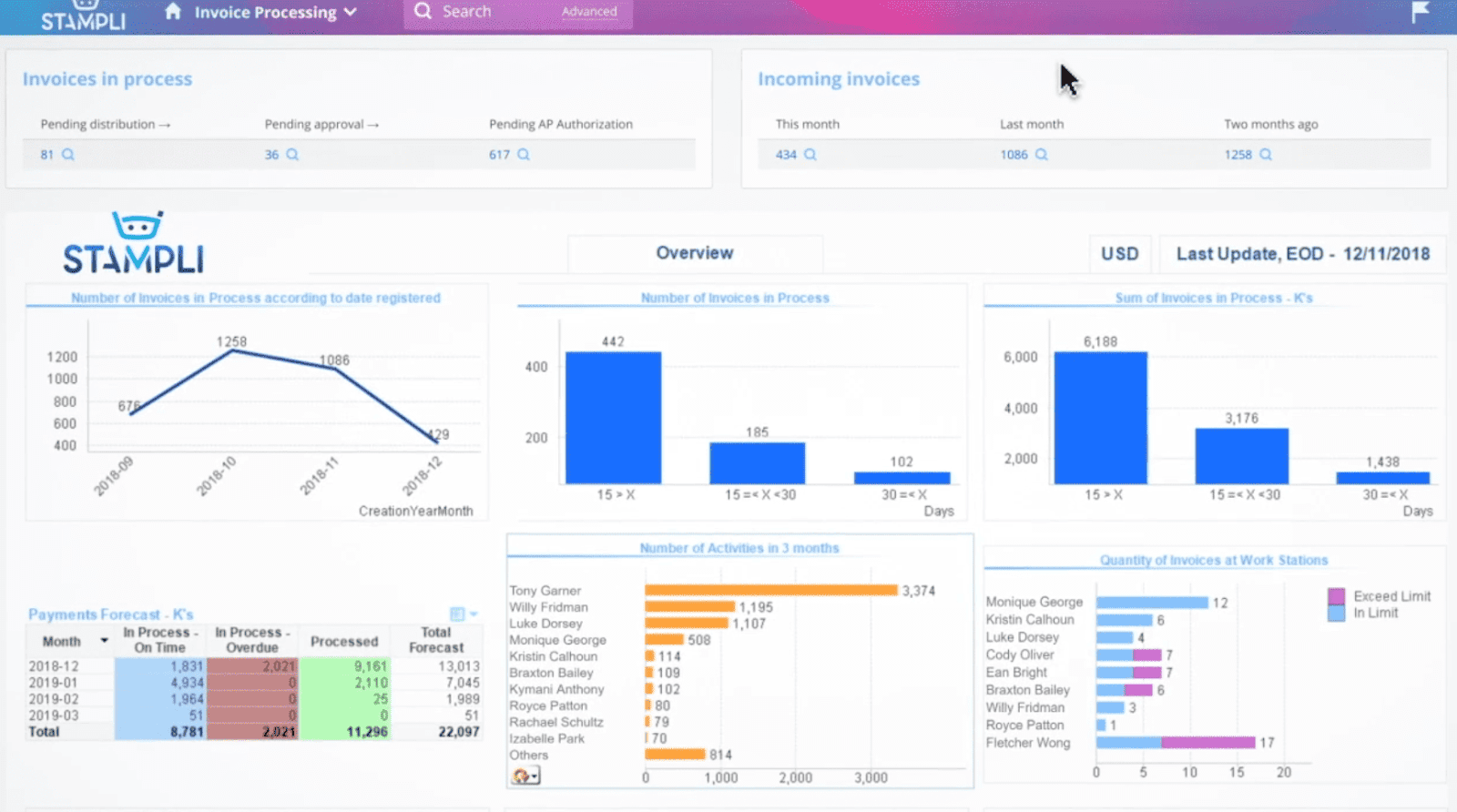
Stampli is an AI agent that fixes one very specific but very real problem: invoice approvals getting stuck. Instead of invoices bouncing between email threads and chat messages, Stampli centralizes all AP communication in one place.
The AI captures invoice data and intelligently routes approvals. It also flags issues such as missing information or mismatches, and more, thereby reducing bottlenecks and improving visibility. AP teams know exactly where invoices stand, and approvers don’t have to hunt for context before clicking approve.
Key features
- AI-assisted invoice capture
- Centralized approval workflows
- ERP integrations
Pros
- Easy to adopt
- Improves transparency fast
- Reduces approval delays
Cons
- Limited beyond AP
- Not a full finance automation platform
Best for: AP teams that want faster approvals and fewer bottlenecks
Pricing: Custom
7. Ramp
Best AI Agent for Spend Control
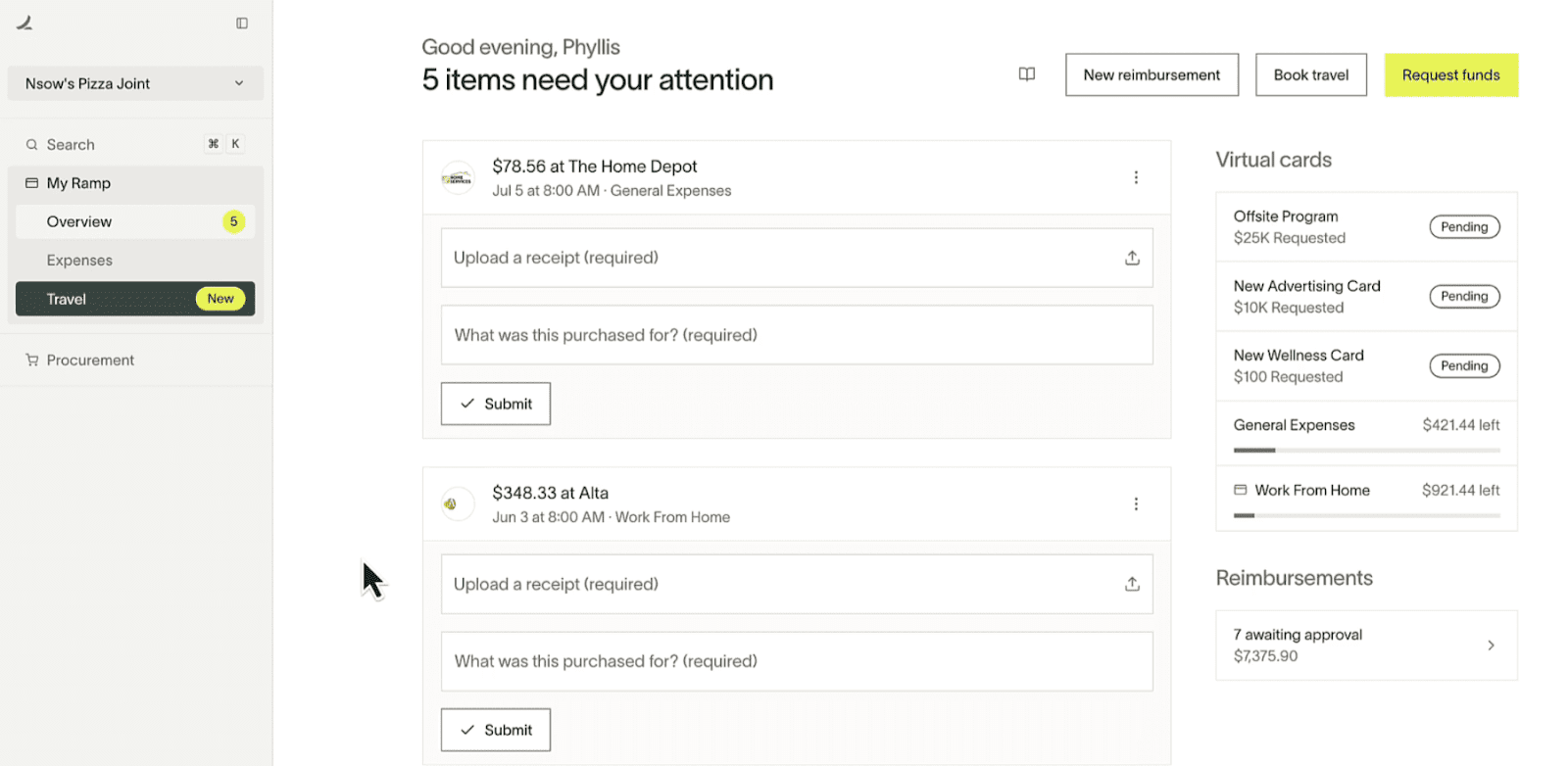
Ramp is an AI agent that’s all about stopping bad spending before it happens. It combines corporate cards, expense management, and real-time reporting into one platform. Transactions are automatically categorized, policies are enforced at the point of spend, and out-of-policy purchases get flagged immediately.
Ramp also surfaces insights that matter to finance teams, such as unused subscriptions or vendors with rising costs. Instead of reacting after the fact, finance teams can proactively reduce spend.
Key features
- Smart corporate cards
- Automated expense categorization
- Real-time spend insights
Pros
- Free to use
- Excellent UX
- Immediate cost-saving insights
Cons
- Spend-focused only
- No AR or forecasting tools
Best for: Startups and SMBs managing company spend
Pricing: Paid plans start at $15/user/month
8. Brex
Best AI Spend Platform for Scaling Companies
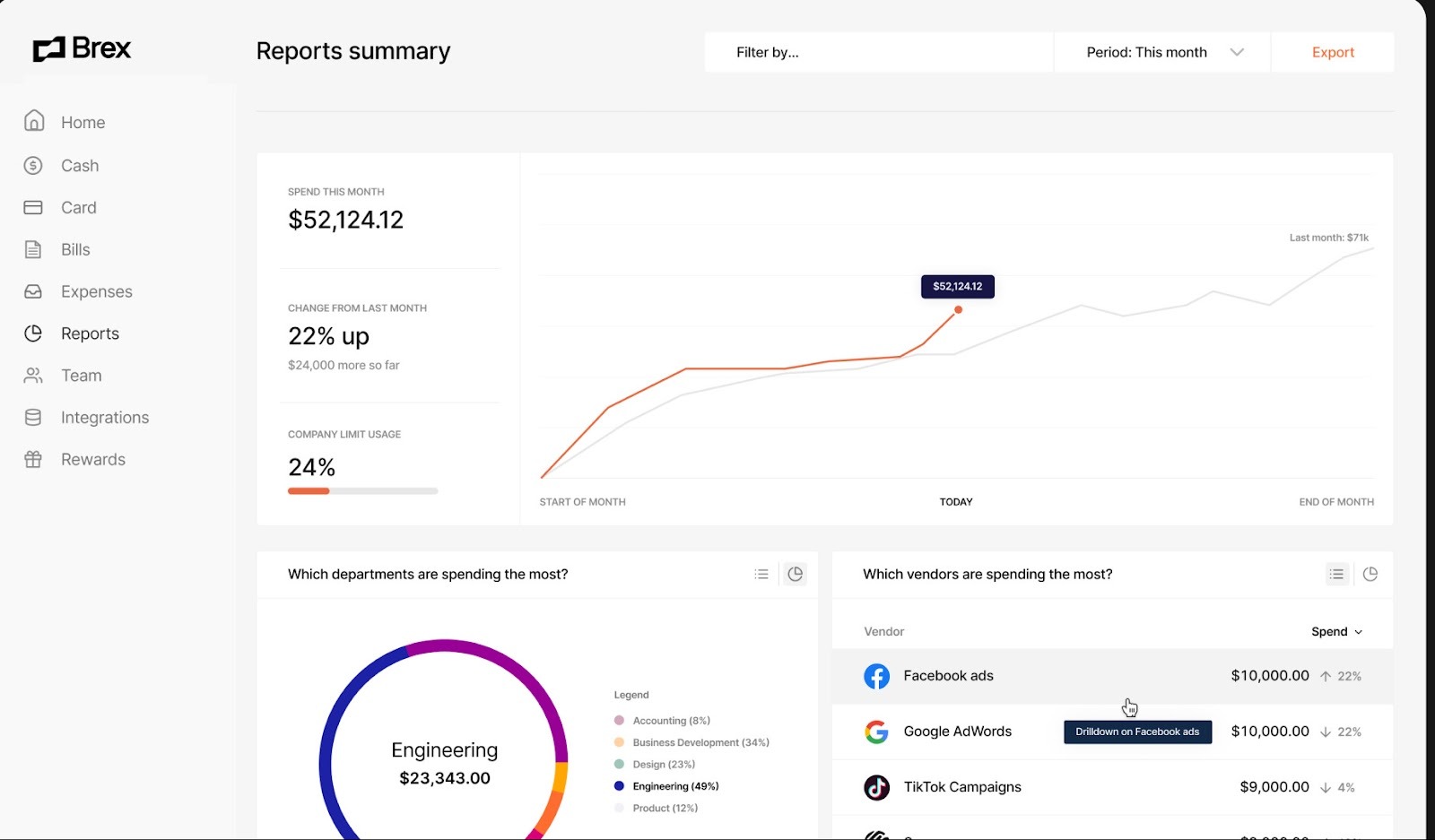
Brex combines corporate cards, expense management, and policy enforcement into a single system that integrates seamlessly with your accounting tools. It’s an AI agent that helps you control your spending without slowing down your team. Spend limits and approvals are set automatically, reducing manual oversight without slowing teams.
Brex also offers a powerful analytics engine that helps finance leaders understand spending patterns and manage vendors more effectively. It’s particularly popular with fast-growing, VC-backed companies.
Key features
- AI-powered expense categorization
- Real-time policy enforcement
- Global spend management
Pros
- Scales well internationally
- Clean, modern interface
- Strong integrations
Cons
- Limited AR capabilities
- Best fit for venture-backed companies
Best for: Scaling companies with complex spend needs
Pricing: Paid plans start at $12/user/month
9. Cube
Best AI Agent for FP&A Teams That Want Governance in Excel
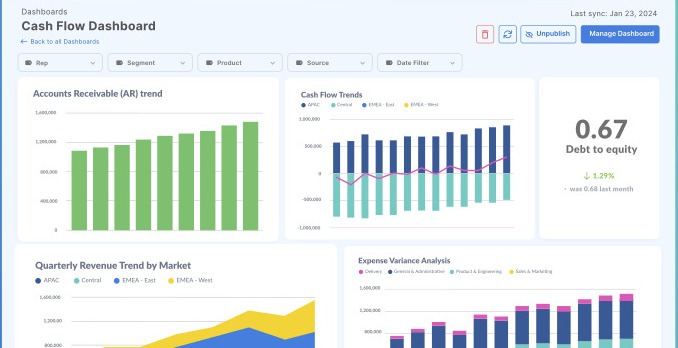
Cube is an AI agent for finance teams who love working in Excel, but hate what comes with it (version chaos, broken links, etc.). Teams can use it to connect Excel to their live data sources, add automated approval processes, and provide version control. This means that the team can create a very flexible forecast model that will still be reliable, something that’s still a challenge with traditional forecasting models.
Cube also enables FP&A teams to run rolling forecasts, conduct scenario analysis, and build reports much faster than before. Additionally, it helps ensure organizations can maintain auditability and compliance requirements.
Key features
- Excel-native planning
- Version control and approvals
- Forecast automation
Pros
- Fast adoption
- Familiar workflows
- Strong FP&A governance
Cons
- Not built for transactional workflows
- Requires spreadsheet discipline
Best for: FP&A teams that rely heavily on Excel
Pricing: Custom (starting around $32K/year)
10. BlackLine
Best AI Platform for Close and Reconciliation at Scale
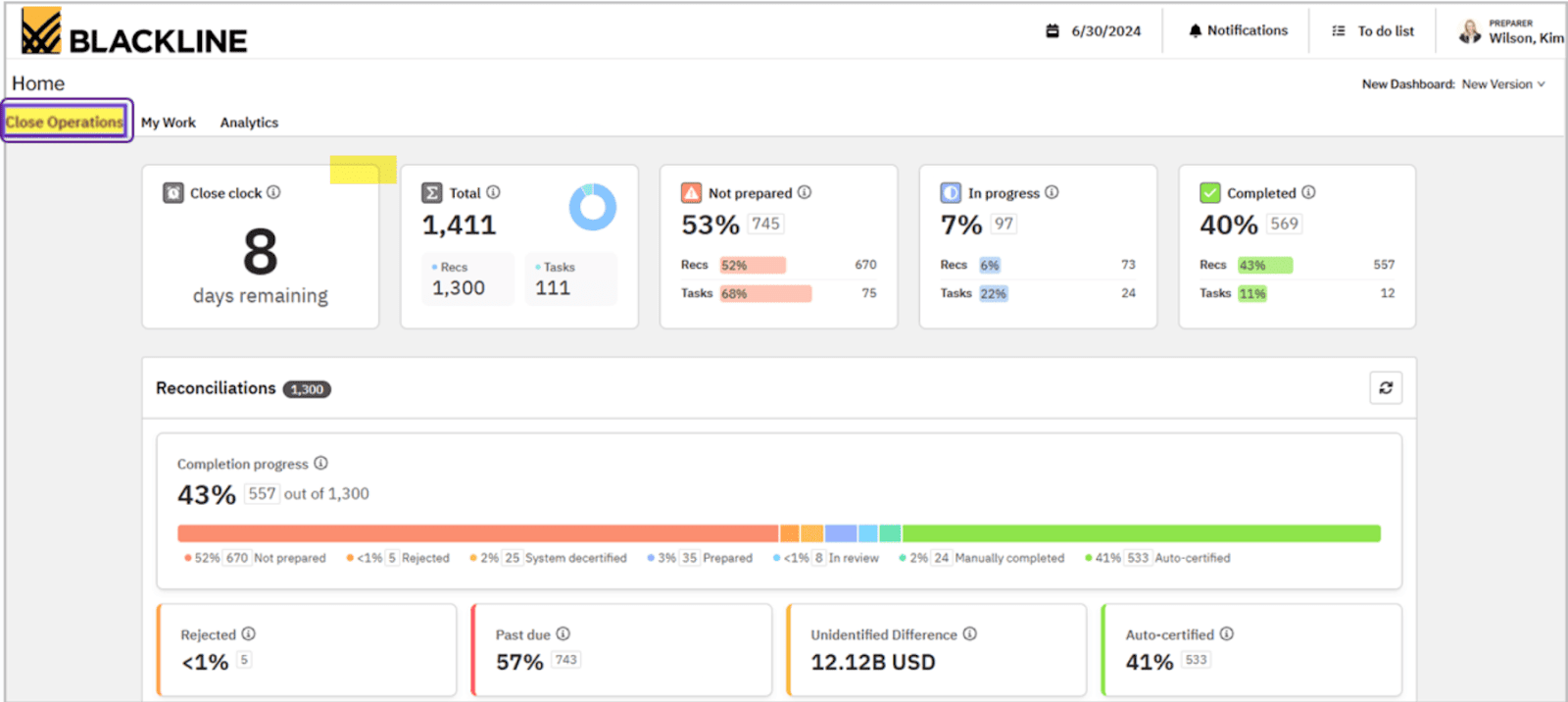
BlackLine’s AI agent is particularly effective at automating tedious tasks like account reconciliations, intercompany transactions, and close management. Transactions are matched automatically, discrepancies are flagged, and audit trails are maintained throughout the process.
The major advantage Blackline brings is shortening close cycles and reducing risk, especially for organizations with multiple entities and systems. However, the platform requires a serious setup and isn’t flexible for smaller teams.
Key features
- Automated account reconciliations
- Close management
- Audit-ready workflows
Pros
- Enterprise-grade reliability
- Strong compliance support
Cons
- Heavy implementation
- Not SMB-friendly
Best for: Enterprise accounting teams managing close and reconciliation
Pricing: Enterprise/custom
11. Zeni
Best AI Finance Ops Platform for Startups
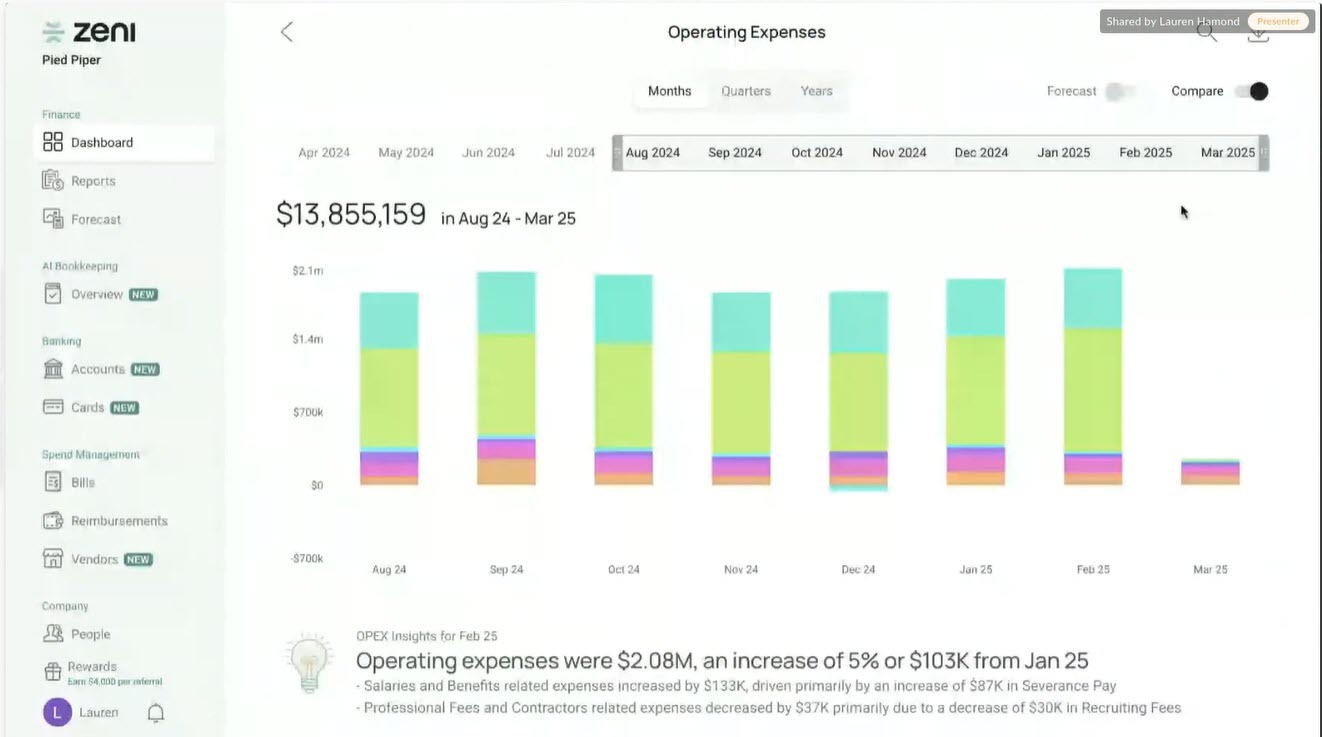
Zeni blends AI automation with human oversight to deliver something closer to a managed finance team than a pure software tool.
The AI agent handles bookkeeping, reconciliation, reporting, and expense management automatically, while surfacing insights and forecasts in real time. Dedicated finance experts review complex transactions to ensure accuracy.
For early-stage companies that don’t want to build an in-house finance team, Zeni offers clarity and speed without heavy setup.
Key features
- AI-powered bookkeeping
- Real-time financial dashboards
- Expense management
Pros
- All-in-one finance operations
- Minimal setup required
Cons
- Less customizable
- Not built for complex enterprises
Best for: Startups that want AI-powered finance operations
Pricing: Starts at $494/month
12. Mosaic
Best AI Agent for Strategic Finance and Real-Time FP&A
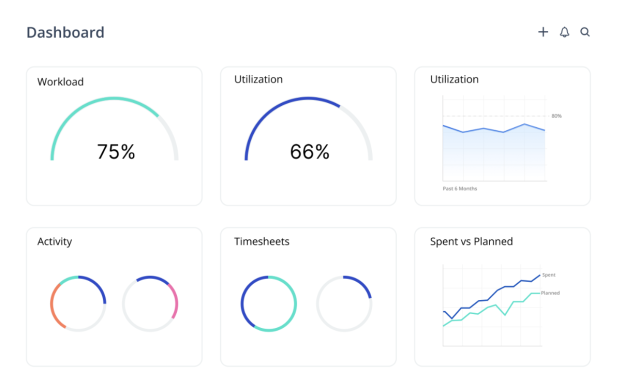
Mosaic is an AI-powered strategic finance platform built for fast-growing SaaS companies. Its AI chat-based assistant answers variance and forecast questions in natural language, which cuts hours off ad-hoc analysis requests from execs.
It pulls data from your ERP, CRM, billing, and HRIS systems into one place, then layers AI-driven analysis, forecasting, and reporting on top.
The result is a real-time view of your business that finance teams can actually act on, rather than a static model that goes stale within a week.
Key features
- AI-powered forecasting and variance analysis
- Real-time data consolidation
- Pre-built SaaS metrics library
Pros
- Modern, intuitive interface designed for finance teams
- Strong SaaS metric coverage out of the box
Cons
- Purpose-built for SaaS which is less useful for non-SaaS business models
- No native Excel export workflow, which can frustrate spreadsheet-first teams
Best for: SaaS finance teams that want real-time strategic finance without an Excel-first workflow
Pricing: Custom (entry-level typically starts around $36K/year)
13. Trovata
Best AI Agent for Treasury and Cash Flow Forecasting
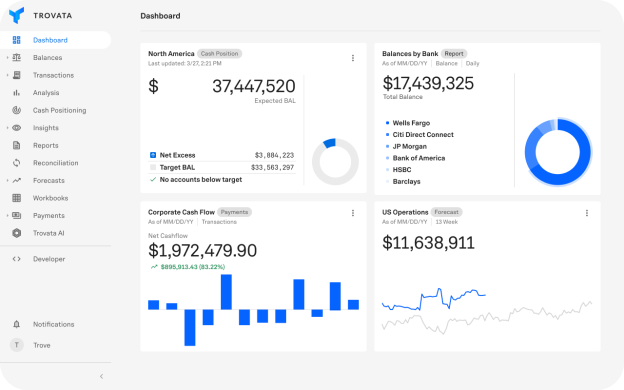
Trovata is an AI-native treasury management platform that connects directly to your bank accounts and gives finance and treasury teams a real-time view of global cash.
It uses machine learning to categorize transactions, forecast cash positions, and flag anomalies, and employs agentic AI to automate recurring treasury workflows like daily cash reporting, variance analysis, and reconciliation summaries.
For finance teams managing cash across multiple banks and entities, Trovata replaces a lot of the manual work that goes into pulling balances, building forecasts, and explaining variances.
Key features
- Multi-bank API connectivity
- ML-based cash forecasting
- Trovata AI chat and agents
Pros
- Faster implementation than legacy TMS platforms
- AI features are embedded across the product, not bolted on
Cons
- Light on advanced enterprise treasury features at the base tier
- $24K/year minimum prices out smaller finance teams
Best for: Mid-market and enterprise finance teams that need real-time cash visibility and AI-driven forecasting
Pricing: Base package starts at $24K/year; enterprise tiers custom
Which AI Agent Is Right for Your Finance Team?
Choosing the right AI agent depends on where your finance team feels the most pain:
- If AR and collections slow cash flow, Lunos AI is designed to address this problem.
- If AP and invoice processing are eating up time, consider Vic.ai or Stampli.
- If forecasting and planning are the bottleneck, Datarails, Cube, or Mosaic are strong picks.
- If you’re managing spend and expenses, Ramp or Brex is the best option.
AI agents work best when they’re targeted. Start with one area, prove the impact, then expand.
Want to see what an AI agent can do for your accounts receivable?
Start for free with Lunos AI and see how an AI coworker can reduce AR workload while improving cash flow visibility.
FAQs on Best AI Agents for Finance Teams
1. What are AI agents for finance teams?
AI agents for finance teams are intelligent systems that monitor financial workflows, take automated actions, and adapt to context. They help automate tasks, reduce manual work, and improve accuracy.
2. What is the best AI agent for accounts receivable teams?
For B2B finance teams, Lunos AI is the best AI agent for accounts receivable. It acts as an AI coworker that:
- Manages follow-ups
- Reads customer responses
- Tracks commitments
- Integrates with ERPs and Slack
Lunos helps reduce AR workload while scaling collections without adding headcount.
3. Are AI agents replacing finance professionals?
No. AI agents are designed to remove repetitive, low-value tasks, not replace finance teams. Most handle monitoring and execution, while humans focus on decision-making, strategy, and exception handling. The most effective teams use AI agents as force multipliers, not substitutes.
4. How should finance teams choose the right AI agent?
Start by identifying your biggest bottleneck. If slow collections impact cash flow, an AR-focused agent like Lunos AI is ideal. For AP automation, tools such as Vic.ai or Stampli are better suited. FP&A teams should look at Datarails or Cube. The best results come from solving one problem well, then expanding.
Make your receivables effortless and focus on what you do best