

Summarize:


Accounts Receivable Dispute Resolution: A Practical Guide for Finance Teams


Quick Summary
The collections process stalls when disputes are buried in email threads and disconnected internal systems.
Lunos closes that gap by automating internal routing and Slack collaboration. This streamlines accounts receivable dispute resolution, helping finance teams lower DSO without the manual back-and-forth.
What Are Accounts Receivable Disputes?
An accounts receivable (AR) dispute is a disagreement over the details of an invoice. It occurs when a customer identifies a discrepancy that prevents them from completing their internal payment process.
In the AR lifecycle, a dispute creates a settlement stalemate. After the invoice is flagged, it remains unpaid while both parties investigate the claim.
For many finance teams, this creates a gray zone where the invoice appears on the aging report. However, the standard collections process is ineffective because the underlying data is being questioned.
In this guide, we explore the primary sources of accounts receivable disputes, their impact on your cash flow, and a practical framework to resolve them.
Why Listen to Us?
After a decade at GoCardless, our founder realized that payments fail not because of technical errors but because of the "wild west" of human negotiation.
We built Lunos to tame that back-and-forth. The tool reads the context behind every delay, turning messy disputes into clear, resolvable actions that keep your cash flow moving.
We are backed by investors and creators behind the leading global tech brands:

Why AR Disputes Happen (And Why They Keep Repeating)
Most accounts receivable disputes are not isolated errors. They result from gaps in the process that occur before an invoice is ever generated.
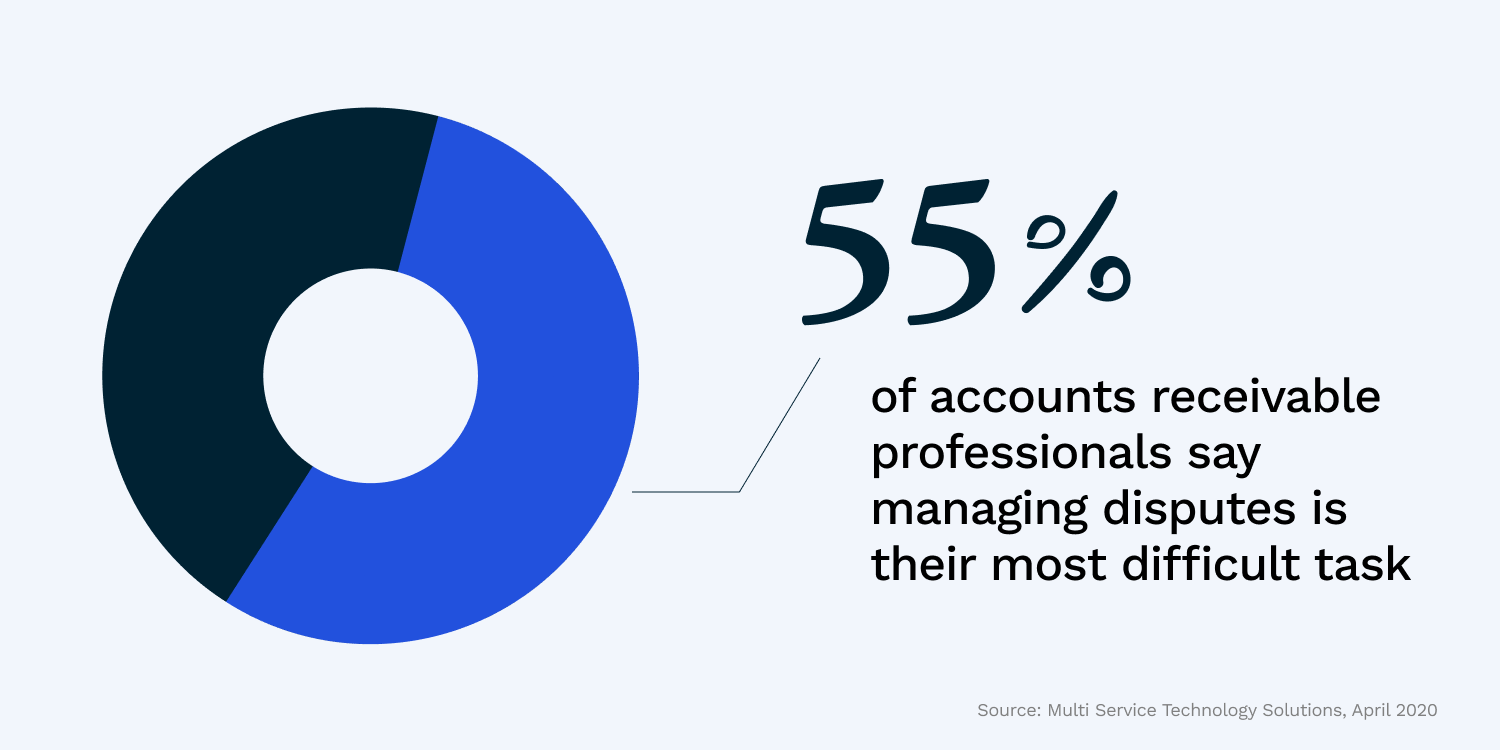
In fact, 55% of accounts receivable professionals now cite dispute management as the most difficult task in the entire collections cycle.
When these gaps are not addressed, the same types of disputes repeat month after month.
They typically stem from:
1. Billing and Invoice Discrepancies
These are administrative failures at the point of invoice creation. If an invoice does not meet the customer's internal requirements, their system may automatically flag it for review.
Common issues include:
Missing metadata: The invoice is sent without a mandatory Purchase Order (PO) number, project code, or the specific tax ID required by the customer’s system.
- Clerical errors: Inaccuracies in line items, tax calculations, or the final total.
- Unclear documentation: Descriptions of work that are too general (e.g., Consulting Services), prompting the customer to request a breakdown before they can approve the payment.
2. Contract and Pricing Mismatch
Disputes often arise when the billing system is out of sync with the commercial agreement.
This often occurs in professional services or project-based firms where terms are customized, including:
Manual overrides: A salesperson agrees to a volume-based rebate or a discount that never gets logged in the central system.
- Inconsistent payment terms: The invoice is sent with standard "Net 30" terms, while the signed contract specifies "Net 60" or "Net 90."
- Wrong pricing tiers: The system fails to account for volume-based pricing or milestone-specific triggers defined in the contract.
3. Service and Delivery Gaps
In project-based work, the dispute is often tied to the proof of service.
A customer may withhold payment due to a perceived mismatch between the work performed and the bill received due to:
- Unmet milestones: The customer believes a specific project phase isn't complete as defined in the original Statement of Work (SOW).
- Scope creep: The bill includes additional hours for work that was never officially authorized through a change order.
- Documentation delays: The finance team cannot immediately produce the signed delivery notes or approved timesheets needed to validate a specific charge.
4. Internal Communication Silos
Many disputes stem from silos between departments.
For example, if a project is delayed and the operations team is aware of it, but the finance team continues to send invoices based on the original schedule, a dispute is inevitable. This forces the customer to coordinate between your internal teams to correct the error.
The Feedback Loop: Why Accounts Receivable Disputes Reccur
The reason most teams see the same disputes every month is that they treat the symptoms, not the cause. When a customer flags an error, the standard reaction is to issue a credit note or a revised invoice as quickly as possible to get paid.
This quick-fix approach solves the immediate cash flow problem, but it leaves the broken data in the system. Without a feedback loop that forces a root-cause correction, the finance team ends up in a permanent cycle of manual data entry and one-off corrections.
The Hidden Impact of AR Disputes on Finance Teams
Accounts receivable disputes create ripple effects across cash flow, operations, and customer relationships through:
- Inflated DSO: Disputed invoices are excluded from payment cycles, artificially increasing days sales outstanding. Notably, invoices with a 6–10% error rate can add 10–20 days to your DSO.
- Cash flow challenge: Customers often withhold the entire invoice amount even when only a small fraction is in dispute.
- Administrative drain: Finance teams spend hours on "data detective work" to hunt down contracts or proof of service.
- Customer relationship decay: Frequent billing errors signal a lack of internal coordination and erode client trust.
- Reporting blind spots: Reactive handling means no data on why disputes happen, preventing process improvements.
- Revenue leakage: Teams eventually write off small discrepancies just to clear the balance and close the month-end books.
Note: AR disputes affect the entire revenue process if left unmanaged.
How Finance Teams Typically Handle AR Disputes
Most teams handle disputes reactively, only discovering the issue when an invoice is already overdue. At this point, the formal collections process stops and shifts into a manual coordination phase.
The collector must reach out to a salesperson or project manager to verify a price or a deliverable, often digging through email threads or old contracts to find the necessary proof. Since these investigations happen in private inboxes, there is no central record of why the payment is stalled or who is responsible for the next step.
The team usually issues a quick credit note to expedite the invoice. But because the master data in the ERP isn't updated, the same error often recurs in the next billing cycle.
A Practical Framework for Accounts Receivable Dispute Resolution
To break the cycle of recurring errors, the resolution process needs to shift from a reactive approach to a structured workflow.
Here's a practical way to approach accounts receivable dispute resolution
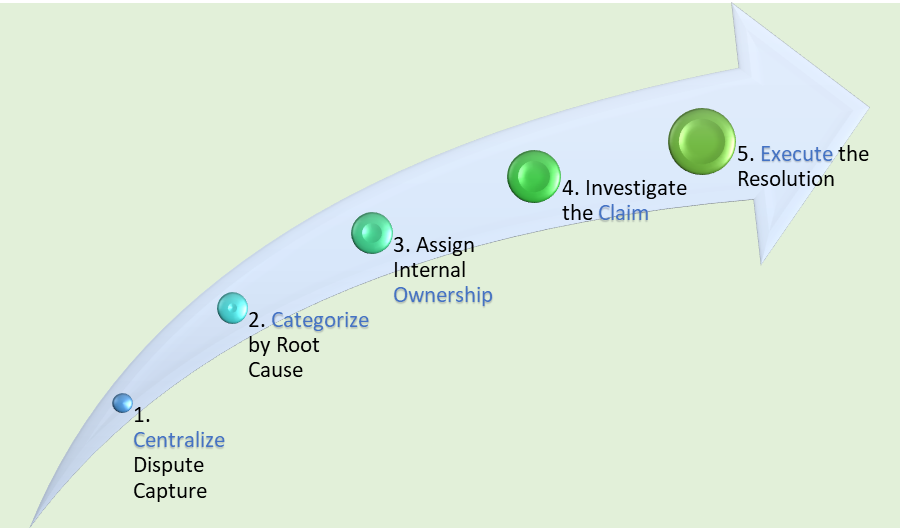
1. Centralize Dispute Capture
Log every dispute in a single shared view as soon as it is identified. Whether it comes through a phone call to a collector or an email forwarded from a sales rep, it needs to be recorded outside of individual inboxes.
This ensures that the entire finance team knows exactly why an invoice is stalled and prevents it from sitting unaddressed on the aging report.
2. Categorize by Root Cause
Assign a specific reason to every dispute, such as a “Pricing Mismatch,” “Missing PO,” or “Service Issue.” These categories help you run reports to see which department is responsible for the most friction.
3. Assign Internal Ownership
Define who is responsible for providing the documentation needed to close a claim. Generally:
- Pricing and contract issues: Sales
- Service and delivery issues: Operations
- Administrative and tax issues: Finance
4. Investigate the Claim
The assigned owner verifies the customer's complaint against internal records. This involves checking the signed contract, auditing the deliverables, or reviewing "proof of service" documents like signed timesheets or delivery receipts.
5. Execute the Resolution
Once the proof is gathered, take formal action to clear the balance.
If the customer is wrong, present the proof and re-initiate collection. If the error was internal, issue a credit memo or a short pay agreement in which the customer pays the undisputed amount, with the remainder adjusted.
Best Practices to Prevent and Resolve AR Disputes Faster
Finance teams can reduce disputes and improve cash flow by addressing root causes before they arise.
This can be achieved through:
1. Improving Invoice Clarity from the Start
An invoice should never be a mystery to the customer. If they can’t immediately find the PO number, a clear list of what was delivered, or the name of the person who approved the order, they will likely flag it as a dispute. Ensure every bill mirrors the customer’s internal records to avoid "missing info" claims.
2. Strengthening Contract and Pricing Accuracy
Most disputes start long before the invoice is sent. Regularly verify that the pricing in your billing system matches the latest signed contracts or quotes. If a salesperson agrees to a custom discount but doesn't update the CRM, that price mismatch will trigger a dispute and a delay every single month.
3. Standardizing Communication with Customers
Don't wait for a dispute to happen to talk to your customers. Sending automated payment reminders or pre-invoice summaries enables customers to flag potential errors before the invoice is officially issued. This keeps the conversation proactive rather than confrontational.
4. Conducting Periodic Audits and Training
Review your dispute logs quarterly to find patterns. If you notice a high volume of "Missing Documentation" claims, it might mean your operations team needs better training on uploading delivery receipts. Use these audits to find the root cause of the friction.
5. Fostering Cross-Team Alignment
Dispute resolution isn't just a finance problem; it involves sales and operations, too. Create a shared understanding of how long these teams have to provide "proof of service" once a dispute is assigned to them. When everyone knows their role in the cash collection cycle, disputes get resolved and prevented much faster.
How Lunos Simplifies Accounts Receivable Dispute Resolution
Lunos works like an extra set of hands for your finance team, reading and responding to customer emails so disputes don't get buried in a busy inbox.
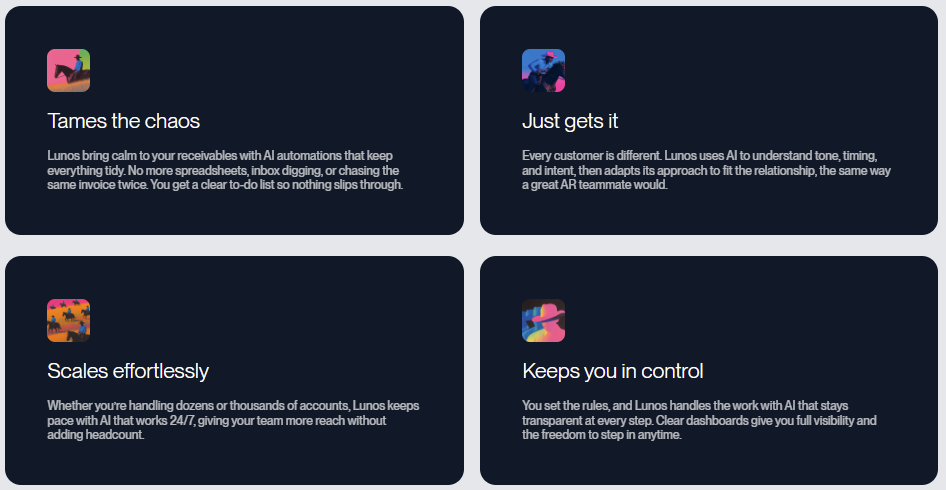
Here’s how Lunos resolves AR disputes:
1. Instant Exception Routing
When a customer replies, "the price is wrong" or "we never received this," Lunos recognizes it as a specific dispute rather than a simple late payment. It flags the invoice as an "Exception" in Slack, giving the finance team visibility before the debt sits on the aging report for weeks.
2. Identifying the Internal Owner
Lunos takes the guesswork out of figuring out who needs to fix a mistake. It identifies the dispute reason from the customer's response and alerts the appropriate internal contact, whether that’s Sales for a pricing error or Operations for a shipping issue, to provide the documentation needed to close the claim.
3. Collaboration in Slack
Your team can resolve disputes directly in Slack instead of chasing updates through scattered email threads. Lunos maintains a record of every interaction and internal note. If a team member is out of the office, the rest of the team knows exactly where the investigation stands.
4. Identifying Patterns for Permanent Fixes
Lunos helps stop future disputes by tracking recurring errors. If a specific customer consistently triggers "pricing mismatch" claims, the platform highlights that pattern. This lets you update your records in the ERP or CRM once, ensuring the same dispute doesn't happen in the next billing cycle.
Moving Beyond the Manual Triage
When your team spends hours digging through email threads to find a missing PO or a pricing error, they aren't managing cash flow. They are doing data entry.
This manual back-and-forth is why accounts receivable dispute resolution drags on for weeks, keeping your DSO higher than it should be. The fix is a system that identifies the problem the second it hits your inbox.
Lunos is the fix that acts as an AI coworker, handling triage for you by recognizing disputes and routing them to the right person so you can focus on resolution rather than searching.
Get started with Lunos to see how you can automate your accounts receivable dispute resolution and get paid faster.
FAQs
How does the dispute resolution process work?
Accounts receivable dispute resolution starts by pausing automated collections to stop reminders. You then categorize the "why": is it a pricing error, a missing PO, or a shipping issue?
Once the right department verifies the claim, you either adjust the data, issue a credit memo, or provide the missing proof to the customer to get the invoice back into a payable state.
How do you handle a disputed invoice?
Speed is the priority. You need to categorize the dispute immediately with a reason code and get it to the person who can actually fix it. The longer an invoice sits in disputed status, the higher your DSO rises.
Why do most AR disputes happen?
Usually, it’s a breakdown in the handoff between sales and billing. A rep promises a discount that doesn't make it into the system, or a warehouse ships a partial order without updating the paperwork.
It’s rarely a customer trying to avoid paying; it’s almost always a request that the invoice match what they received.
Make your receivables effortless and focus on what you do best