

Summarize:


11 Best Automated Payment Reconciliation Software for 2026


Quick Summary
Manual bank reconciliation is a notorious bottleneck, turning simple verification into a tedious hunt for ghost transactions.
Instead of wasting days matching lines or untangling multi-currency fees, finance teams use automated payment reconciliation software to sync ledgers in real time, ensuring forecasts remain accurate.
Here are our top 3 picks:
Why Automated Payment Reconciliation Software Matters
Most finance teams don't have a data problem; they have a detective problem.
Standard accounting tools can store information, but they still leave humans to solve the mystery of why a bank balance doesn't match the ledger.
Automated payment reconciliation software flips the script by turning the month-end clean-up into a background process that:
- Syncs in real-time so your ledger reflects your actual bank balance.
- Decodes messy partial payments and bulk settlements without human intervention.
- Flags anomalies instantly to catch errors early
In short, it keeps your books audit-ready and your cash flow data useful.
In this article, we’ve ranked the 11 best automated payment reconciliation software for 2026, highlighting key features, pros, cons, and pricing.
Why Listen to Us?
Lunos supports finance teams managing 500 to 50,000 invoices monthly. Backed by GoCardless, General Catalyst, and other partners, our team brings 50+ years of fintech expertise.

We’ve built a digital teammate that treats reconciliation as a communication problem, not just a data entry task.
By automating the messy back-and-forth that holds up the close, we reduce manual AR workloads by 75%, giving us a front-row seat to what true automation looks like.
11 Best Automated Payment Reconciliation Software
1. Lunos
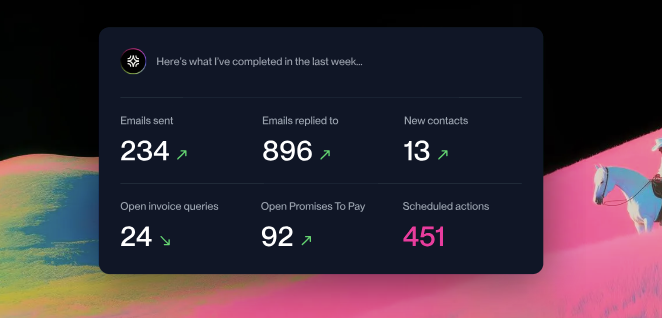
Lunos acts as an AI coworker that automates the most time-consuming part of the payment reconciliation process: matching blind payments to open invoices.
Traditional software fails when a customer pays without a reference number or sends a single lump sum for multiple invoices. Lunos solves this by reading the remittance advice or the body of the customer's email, extracting the intent, and suggesting the correct match within your ERP.
Instead of a finance clerk manually digging through an inbox to find out which three invoices a $15,000 wire transfer belongs to, the Lunos AI agent identifies the context and prepares the entry for approval. This ensures your sub-ledger remains accurate in real time, without the typical month-end scramble.
Key Features
- Automated remittance parsing that extracts payment data from unstructured email text and PDF attachments
- Intelligent invoice matching that identifies short payments and partial settlements based on historical customer behavior
- Three autonomy modes to control how the AI applies payments to the ledger
- Slack-native approvals for reconciliation exceptions, so your finance team never leaves their workflow
- Real-time sync with ERPs like NetSuite and QuickBooks to close the loop between the bank and the books
- Exception routing that automatically flags disputed amounts for human review instead of stalling the entire reconciliation process
- A continuous audit trail that logs exactly why a payment was matched to a specific invoice for compliance
Pricing
- Starter: $0/month (0.3% fee on collected revenue)
- Pro: $200/month + 0.3% fee
- Enterprise: Custom pricing
Pros
- Eliminates manual spreadsheet matching and email triage
- Increases cash forecasting accuracy by identifying payment intent early
- Speeds up the month-end close by continuously reconciling payments
- Operates inside Slack and email to prevent software fatigue
Cons
- High-volume custom reconciliation rules are limited to the Enterprise tier
Best for: B2B SaaS companies and growing enterprises that need to automate complex, conversation-heavy payment matching without adding headcount.
2. HighRadius
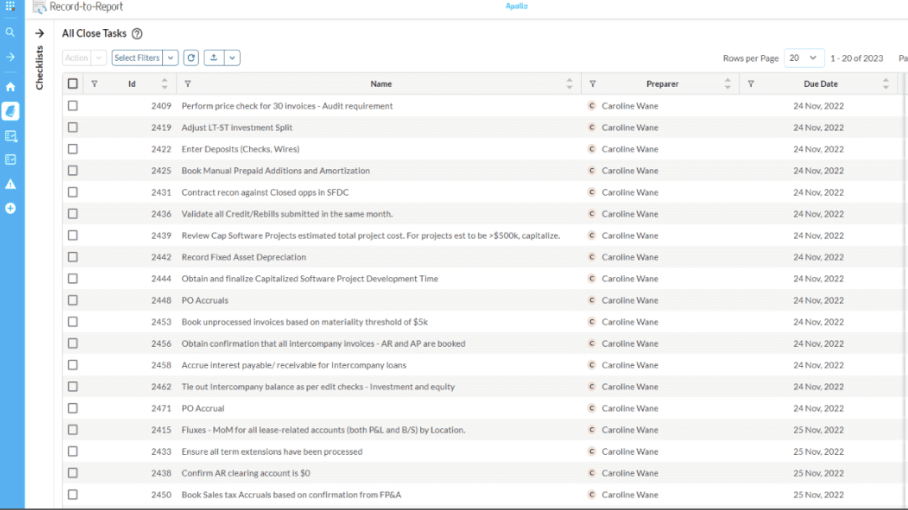
HighRadius offers an enterprise-grade AI platform that automates complex record-to-report and invoice-to-cash cycles. Its payment reconciliation software focuses on achieving a continuous close to autonomously match bank statements with general ledger entries.
HighRadius connects directly to over 10,000 banks via APIs to pull and reconcile transactions in real time.
Key Features
- Automated transaction matching that aligns payments with invoices or ledger entries
- Intelligent deduction management to flag and categorize short payments
- LiveCube for custom data analysis and reporting
- Automated journal entry posting that updates the ERP immediately
Pricing
- Custom
Pros
- Direct processing rates for complex payments
- Reduces DSO by clearing open receivables faster
- Handles massive transaction volumes across global units
- Strong predictive capabilities for cash flow trends
Cons
- Interface and setup can feel complex for smaller, agile teams
Best for: Large, global enterprises with high invoice volumes that need to automate the end-to-end cash application and reconciliation process.
3. BlackLine
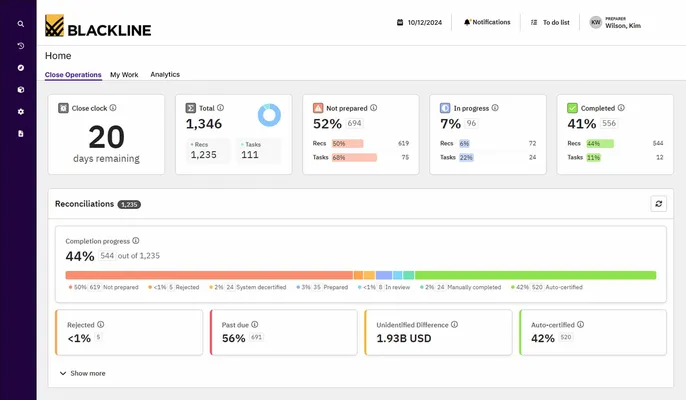
BlackLine is the go-to for corporations that need to transition from manual ticking and tying of month-end closing. It pulls millions of rows of data from global bank accounts and automatically matches them against the ledger.
BlackLine keeps your books audit-ready at all times, turning the final week of the month from a chaotic scramble into a simple review process.
Key Features
- High-frequency matching engine built to process millions of transactions across global entities
- Automated journal entries that update your ERP the moment a match is confirmed
- Verity AI to flag weird anomalies or data gaps before they become actual audit issues
- Pre-built integrations into SAP, Oracle, and NetSuite
- Automated variance tracking to spot unusual swings in account balances between months
Pricing
- Custom
Pros
- Reduces audit prep time by centralizing all documentation
- Standardizes reconciliation workflows across global business units
- Provides high levels of control and segregation of duties for compliance
- Enables a continuous close by reconciling data throughout the month
Cons
- Implementation requires a dedicated time and IT resources
- The interface and deep feature set can feel complex for agile, mid-sized businesses
Best for: Large, global corporations and public companies that need strong controls and a centralized high-volume reconciliation.
4. Tipalti
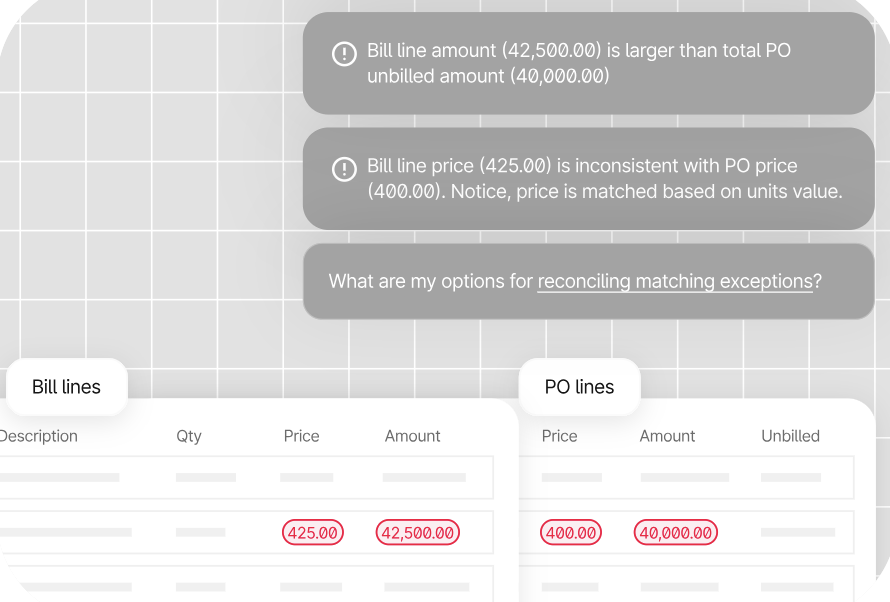
Tipalti takes the pain out of global reconciliation by baking it directly into the payout process. Instead of the usual headache of matching transactions after they've occurred, the automated payment reconciliation platform syncs payment results across 196 countries and 120 currencies with your ERP in real time.
This stops finance teams from having to manually stitch together bank statements and messy spreadsheets from different international entities. By the time you're ready to close the books, the ledger is already updated and accurate.
Key Features
- Instant payment reconciliation that combines methods, currencies, and subsidiaries into a single report
- Automated fraud detection that blocks suspicious payees and identifies abnormal transaction patterns
- Self-service supplier portal to automate payee onboarding and tax compliance
- Detailed reporting on payment status, tax history, and invoice details with custom filters
Pricing
- Select: €99/month
- Advance: €219/month
- Elevate/Plus: Custom
Pros
- Cuts the financial close cycle by about 25%
- Simplifies multi-currency and cross-border reconciliation
- Provides 24/7 visibility into global cash flow
- Reduces the risk of fraudulent payouts with automated screening
Cons
- Fees can increase quickly with high transaction volumes
- Focuses on accounts payable rather than total treasury management
Best for: Fast-growing global companies and mid-market businesses that need to automate mass payments and international reconciliation.
5. FloQast
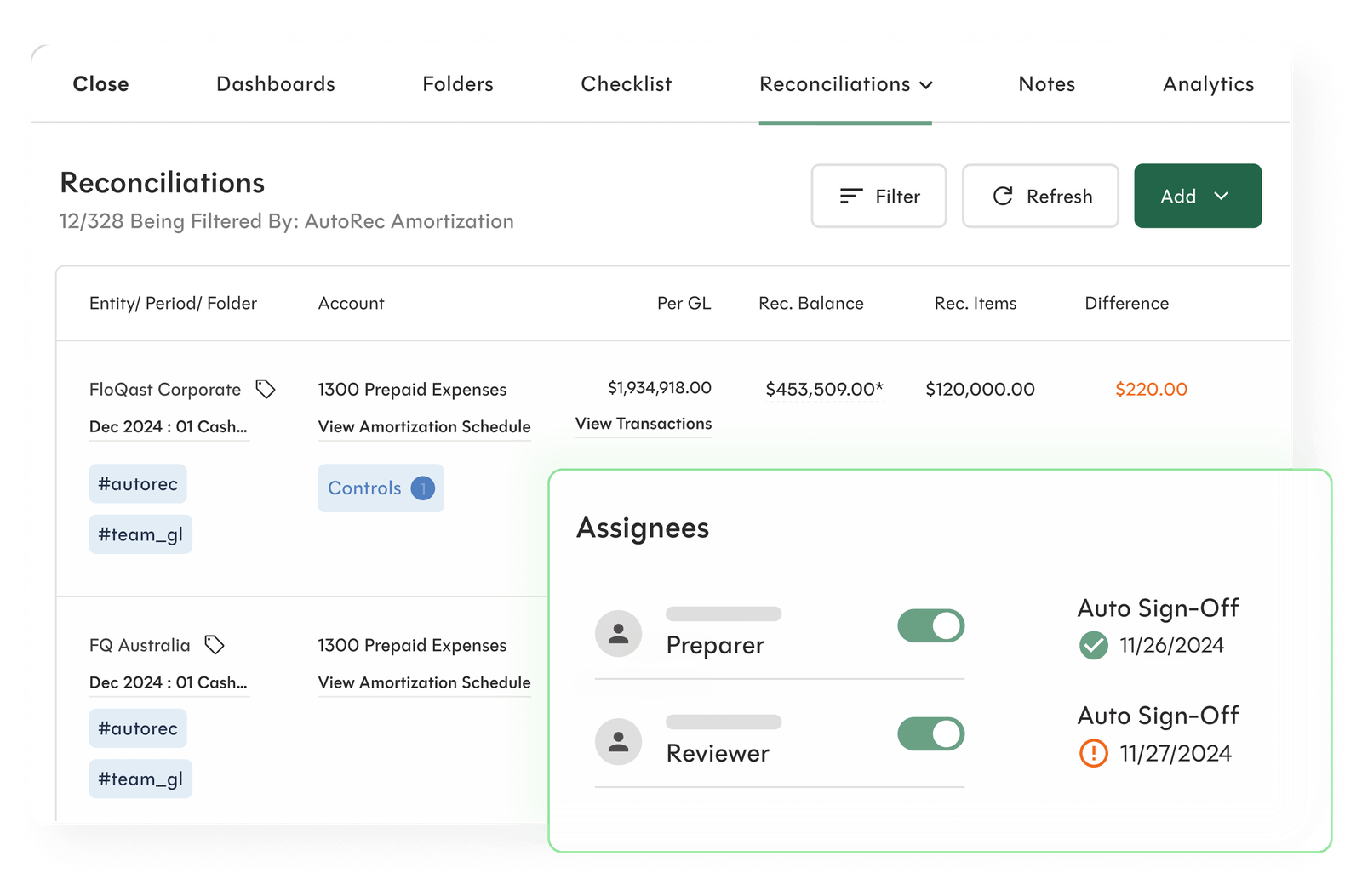
FloQast was built by CPAs to fix the spreadsheet nightmare without forcing teams to ditch Excel. It acts as a digital manager for your nearby plugging, integrating with your existing folders and ERP.
It organizes your workflow through automated tie-outs and tracking checklists. This makes it a great middle ground for teams that are too big for manual tracking but don't want a massive IT project.
The platform is also known for its AutoRec feature, which handles the tedious matching of bank and credit card transactions.
Key Features
- Excel integration that syncs with your existing workbooks
- AutoRec matching engine to automatically pair high-volume bank and credit card transactions
- ReMind automation to send out automated requests and follow-ups for missing data
- Audit-ready folders that automatically organize supporting docs for easy navigation
- Flux analysis tools to help explain large month-over-month swings in account balances
Pricing
- Custom
Pros
- Fast setup that typically takes 4 to 6 weeks with minimal IT support
- High adoption rates because the interface feels familiar to Excel users
- Better visibility into task ownership without needing constant status meetings
- Reduces audit prep time by keeping all evidence linked and signed off
Cons
- Heavy dependency on Excel, which may not suit teams trying to go 100% cloud-native
- Scalability limits for massive global companies that need deeper enterprise features
Best for: Mid-market companies that want to automate their close while keeping the flexibility of their existing spreadsheets.
6. Atlar
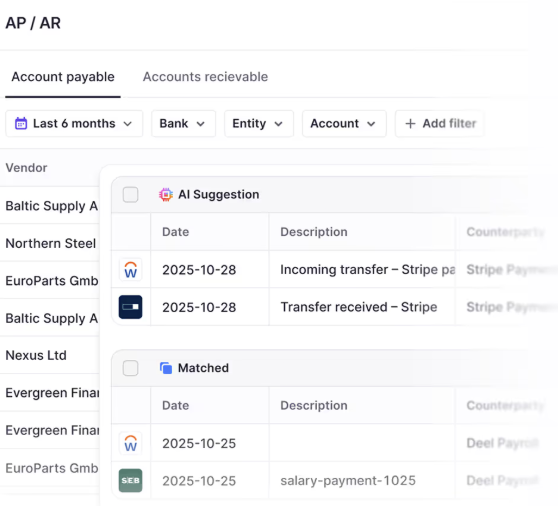
Atlar is a modern payment reconciliation software that replaces the fragmented spreadsheet-and-bank-portal aspect with a single API-driven dashboard. It focuses on real-time bank connectivity, enabling finance teams to view their global cash positions and reconcile transactions.
Atlar also directly connects ERPs such as NetSuite and SAP, ensuring your books always reflect the current state of your bank accounts.
Key Features
- Direct API connections to over 10,000 banks for real-time transaction and balance data
- Automated matching that identifies partial payments and currency differences without manual rules
- Exception workflows that flag unmatched items for immediate team review
- Fully traceable audit logs for every match and adjustment made within the system
Pricing
- Custom
Pros
- Enables a continuous close by matching transactions the moment they clear the bank
- Cuts down manual data entry for high-volume payments by up to 95%
- Modern interface that is much easier to navigate
Cons
- Heavily focused on treasury and cash rather than full-scale accounting
- Requires modern ERP connectivity to get the most value out of the automation
Best for: Scale-ups and mid-market companies that need a modern, API-driven way to manage global bank reconciliations and cash.
7. Airwallex
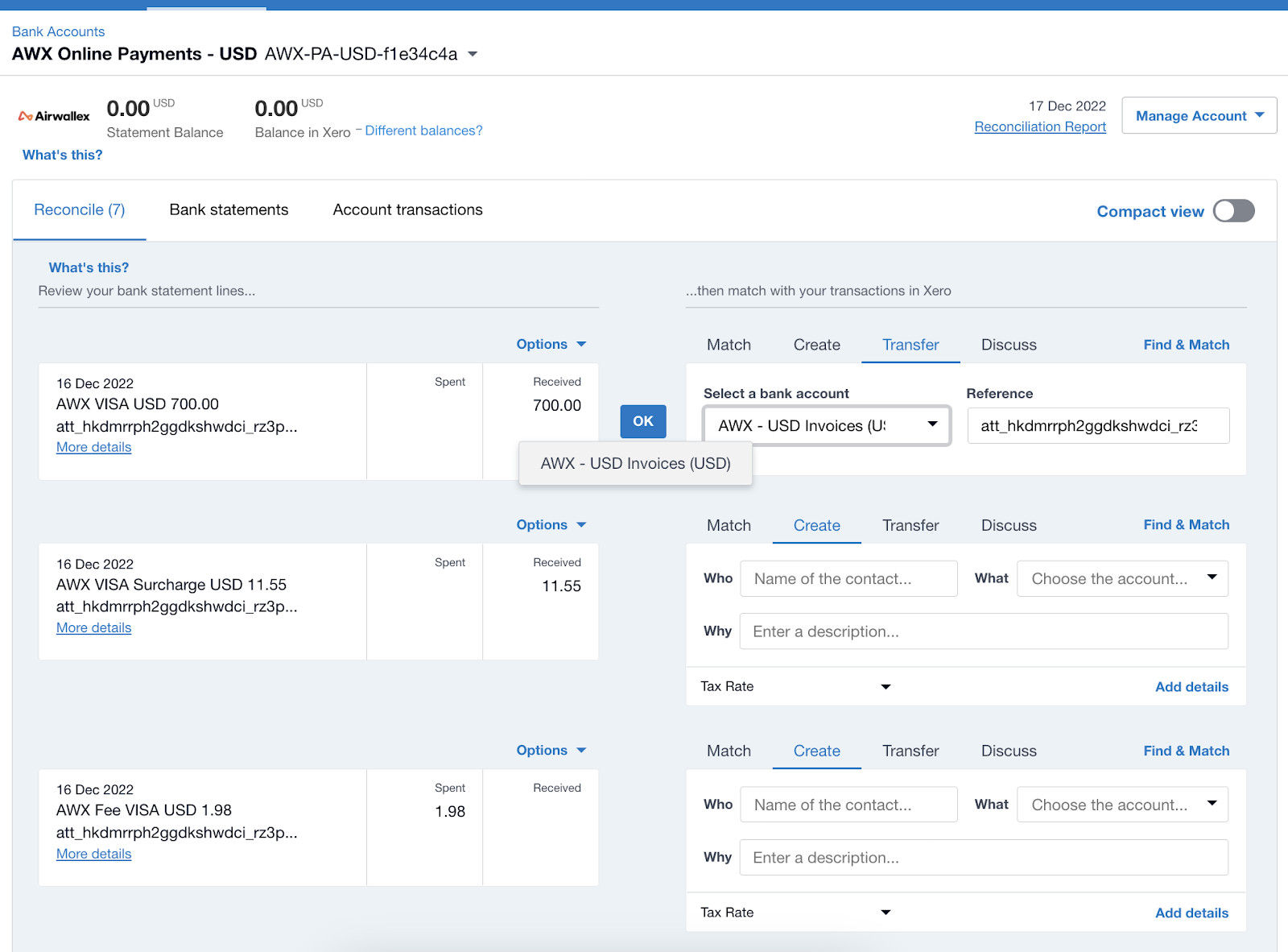
Airwallex is a global payments platform that acts as a bridge between your international bank accounts and accounting software.
Instead of spending hours trying to match a specific bank transfer to an open bill, Airwallex syncs that data directly into tools like Xero or NetSuite. This ensures your books stay accurate without having to manually calculate every surcharge or conversion.
Key Features
- Invoice payment integration that automatically marks invoices as paid when customers use the Airwallex checkout
- Multi-currency wallet system that lets you receive, hold, and settle funds in over 20 currencies
- Smart matching for settlement amounts that accounts for gateway fees and surcharges automatically
- Virtual and physical cards with built-in expense management to reconcile employee spend as it happens
Pricing
- Explore: Free
- Grow: $99/month
- Accelerate: $499/month
Pros
- Simplifies the complex process of reconciling international payments and FX fees
- Offers a one-stop shop for banking, card spending, and payment acceptance
Cons
- The reconciliation features are most powerful when paired with Xero or NetSuite
- It can feel more like a bank than a dedicated accounting tool for some finance teams
Best for: International e-commerce businesses and services that need to reconcile high volumes of multi-currency invoices and global payments.
8. Xero
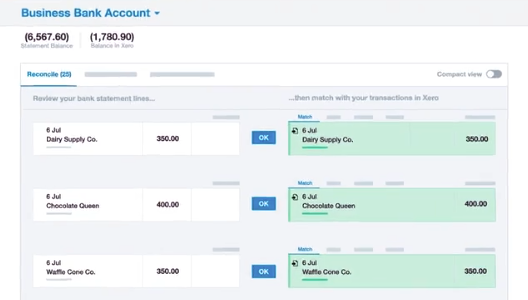
Xero is a cloud accounting platform that turns daily bank reconciliation into a quick task rather than a month-end project. It automatically pulls your bank statements and uses a side-by-side interface to match them against your invoices and bills.
Because the system learns your patterns, it suggests matches for you, allowing you to reconcile most transactions with a single click.
Key Features
- Automated bank feeds that import transaction data from your bank accounts every day
- Bank rules to automatically categorize and code recurring expenses or deposits
- Cash coding tool for bulk reconciling hundreds of transactions at once
- Mobile app access to reconcile accounts and track cash flow on the go
- Hubdoc integration to pull data from scanned receipts and bills directly into the ledger
Pricing
- Starter: $29/month
- Standard: $50/month
- Premium: $75/month
Pros
- Side-by-side interface makes it easy for anyone to spot and fix errors
- Supports unlimited users, which is ideal for working with external bookkeepers
- Connects with over 1,000 third-party apps to customize your finance stack
Cons
- The Starter plan has tight limits on the number of invoices you can send
- Customer support is primarily restricted to online tickets rather than phone calls
Best for: Small to medium-sized businesses and sole traders who need a simple, automated way to keep their bank records and books in sync.
9. Adra by Trintech
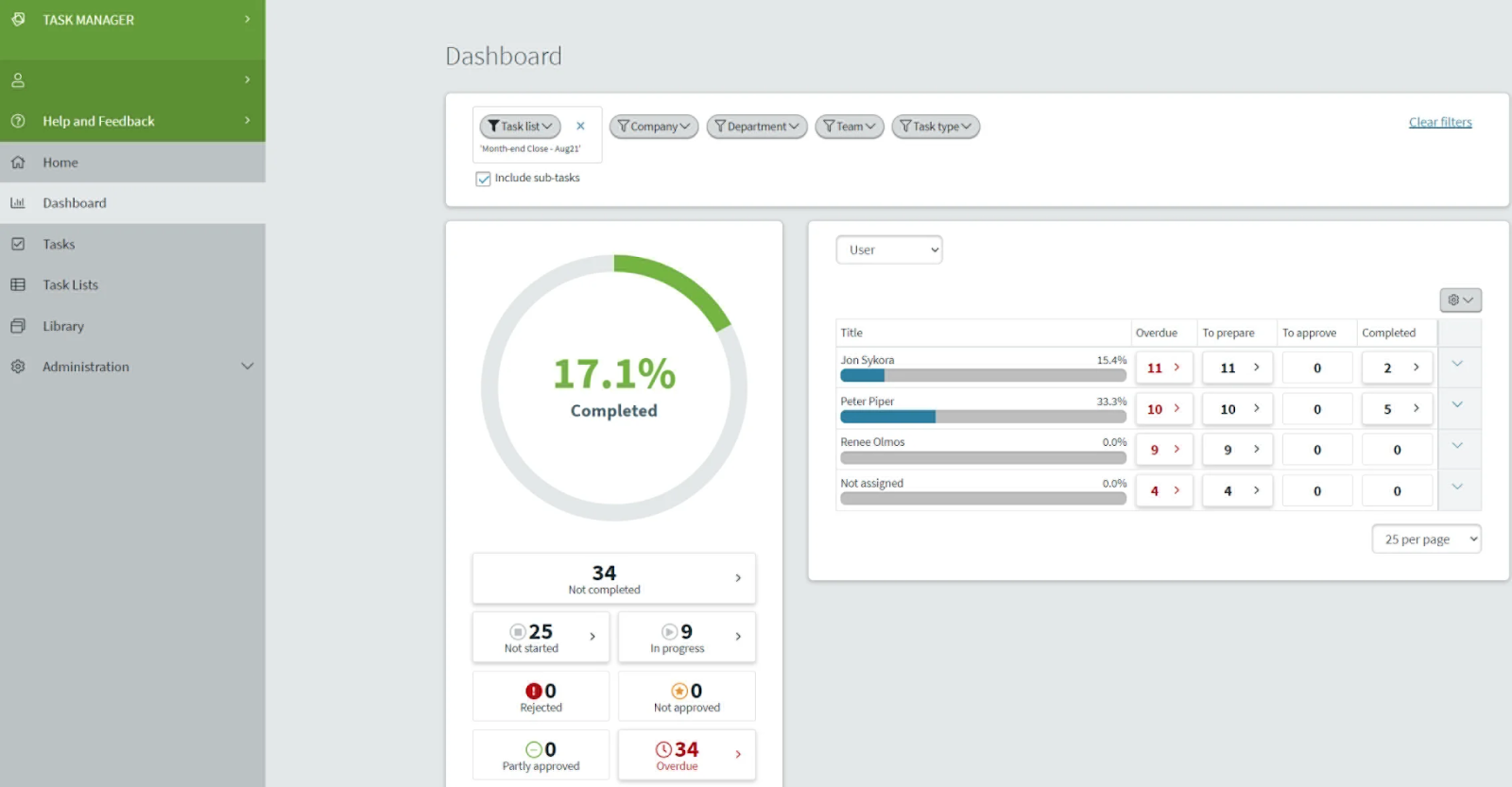
Adra is built for mid-sized companies that have outgrown spreadsheets but aren't ready for a massive enterprise system. It focuses on high-volume transaction matching, including credit card payments, PayPal transactions, and intercompany transfers.
Adra also flags errors or potential fraud as they happen, so you aren't stuck chasing down discrepancies weeks after they occurred.
Key Features
- High-volume matching engine designed for credit cards, digital wallets, and bank lines
- Real-time error detection to catch double-billing or mismatched amounts instantly
- Centralized balance sheet reconciliation to standardize how the team handles substantiation
- Automated journal entries to sync reconciled data directly back to your ERP
- Audit-ready reporting that provides a full history of every match and manual adjustment
Pricing
- Custom
Pros
- Helps stop unnecessary write-offs by catching errors at the detail level
- Specifically built for high-transaction industries like retail and e-commerce
- Gives auditors a structured, easy-to-follow path through your books
Cons
- Smaller integration ecosystem
- No transparent pricing available without going through a sales consultation
Best for: Mid-sized businesses in retail or hospitality that need to automate complex transaction matching without a huge IT project.
10. Solvexia
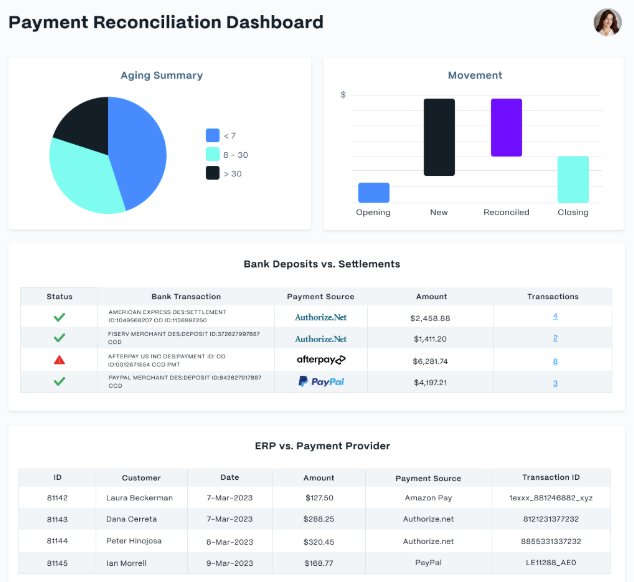
Solvexia is a no-code automation platform built for finance teams that need to handle millions of transactions across systems without needing a developer. It uses fuzzy logic to match data even when references don’t line up perfectly. This is a major plus for companies dealing with complex e-wallets or high-volume retail payments.
Since it connects directly to your existing files and software, you can automate anything from basic bank reconcilliations to messy intercompany eliminations.
Key Features
- Pairs transactions even with imperfect data or slight reference mismatches.
- Gives you immediate visibility into discrepancies and aging items as they happen.
- Pulls and cleans information from spreadsheets, ERPs, and bank feeds automatically.
- Routes exceptions and adjustments to the right person for review.
- Tracks every single step and adjustment for total transparency during audits.
Pricing
- Custom
Pros
- Dramatically cuts down the high error rates usually found in manual spreadsheet work.
- Fast ROI, with most teams seeing significant time savings within 6 to 12 months.
- Reduces key-man dependency by standardizing and documenting platform processes.
Cons
- An initial learning curve to master the workflow builder's logic.
- Pricing isn't transparent; you have to go through a sales consultation for a quote.
Best for: Finance teams in fintech, retail, and travel that deal with massive volumes of varied data.
11. Kolleno
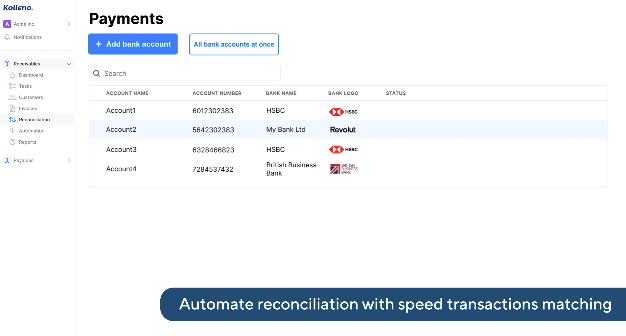
Kolleno is a financial operations platform that brings your receivables, payments, and reconciliation together. It’s built to handle the tricky parts of B2B payments, like when a customer pays multiple invoices with a single lump sum or sends a partial payment without a clear explanation.
Kolleno automatically suggests matches, so you can stop manually cross-referencing bank lines against your aging report.
Key Features
- Live multi-source sync that connects your ERP, bank accounts, and payment processors in real-time
- Smart matching engine that automatically pairs payments to invoices, even for complex one-to-many scenarios
- White-labelled payment portal giving customers a branded space to pay via ACH, card, or open banking
- Automated collections workflows that replace manual follow-ups with personalized multichannel reminders
- Consolidated communication timeline, keeping every email, text, and note in a single customer view
Pricing
- Custom
Pros
- Reduces DSO; many users see a 30% reduction within the first few months.
- Automate the follow-up part of the reconciliation process, not just the matching.
- Centralizes all client communication and payment history into a single timeline.
- Strong integration with popular ERPs and niche tools like Clio.
Cons
- Some advanced automation features, such as specific auto-payment rules, can require a complex initial setup.
- While the built-in reports are solid, you might need their support team to help build specific niche metrics.
Best for: B2B companies with high invoice volumes that need to bridge the gap between their collections strategy and bank reconciliation.
From Manual Matching to a Real-Time Close
The detective problem doesn't have to be a permanent fixture of your finance department.
By moving away from manual cross-referencing and toward real-time close, you stop fixing month-end errors and start focusing on high-value financial strategy.
Choosing the right automated payment reconciliation software is the first step toward reclaiming your team's time and ensuring your aging reports reflect your true cash position.
Lunos AI is the digital teammate that handles the messy communication and data gaps that typically stall the close, reducing manual AR workloads by 75%.
Get started with Lunos today and turn your AR process into a background task.
Make your receivables effortless and focus on what you do best