

Summarize:


11 Accounts Receivable Collections Software For 2026 (Compared)


Quick Summary
Manual chasing is a notorious bottleneck, turning routine follow-ups into a fragmented hunt for missing payments.
Instead of losing weeks to manual correspondence, finance teams use accounts receivable collections software to sync communication and cash flow in real time.
Here are our top 3 picks:
Why Accounts Receivable Collections Software Matters
Manual AR is a slow, direct drain on your liquidity.
The primary issue is the hidden cost of human error and administrative delay. 47% of B2B invoices are paid late, with nearly half of those delays caused by simple oversight rather than a lack of funds.
Modern accounts receivable collections platforms close the data gap between the initiation of a payment and the clearing of an invoice. This reconciliation provides a real-time view of your cash position and promotes high-stakes decision-making without waiting for a two-week month-end close.
In this article, we’ve ranked the 11 best accounts receivable collections software for 2026, highlighting key features, pros, cons, and pricing.
Why Listen to Us?
After spending a decade trying to fix how B2B payments move, we eventually realized we were holding a direct-debit hammer while the rest of the business world was still stuck in a wild west of messy, manual email threads.
We saw firsthand that AR isn’t just a payment problem, but a communication and negotiation bottleneck.
Tired of watching finance teams drown in the back-and-forth, we built a better way. That’s how Lunos was born.
We designed an autonomous AI agent to manage the asynchronous communication required to resolve invoices. This has helped teams reduce their manual AR workloads by 75%, finally allowing them to shift from chasing to strategy.
For a deeper look at how AI is changing accounts receivable, see our full breakdown of the shift away from rule-based workflows.
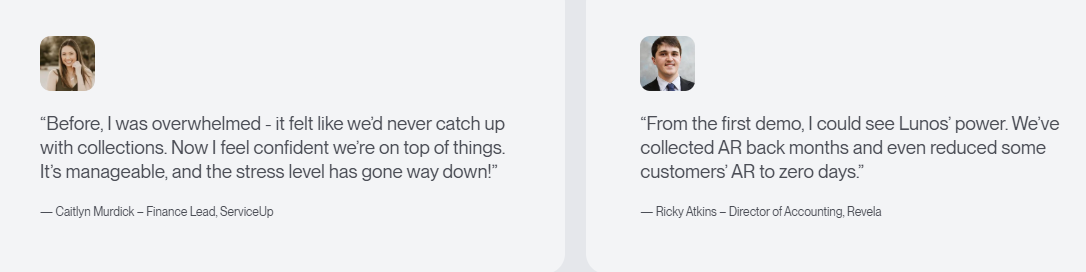
Here's what some of our clients have to say:
1. Lunos
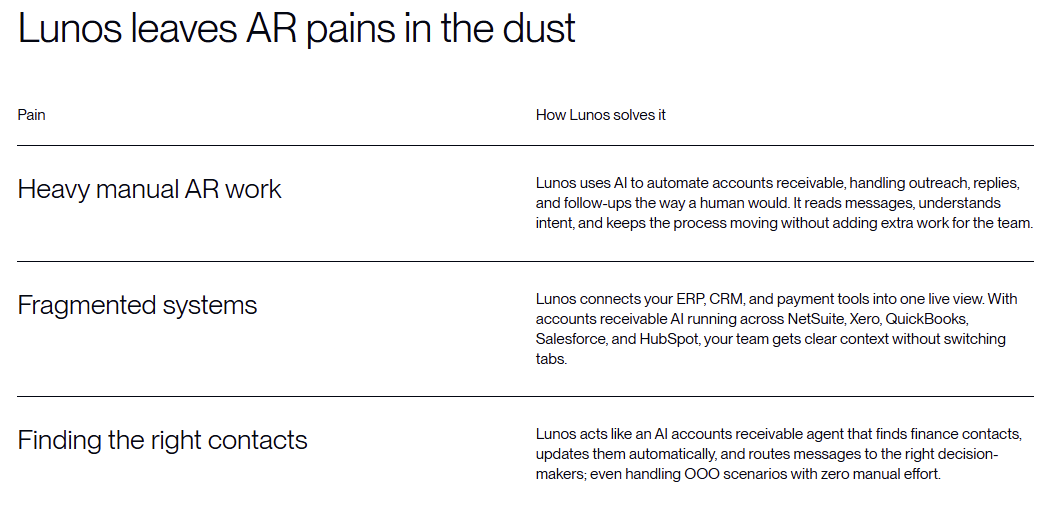
Lunos acts as an AI coworker for accounts receivable, handling customer follow-ups and collections. Unlike tools that only send one-way templates, Lunos AI manages the entire two-way conversation by reading and responding to customer emails like a human collector.
This accounts receivable collections platform syncs your ERP, CRM, and email into a single view, ensuring every message is based on actual relationship history and payment intent. It handles the repetitive triage of "I'll pay next week" replies while keeping you in control through Slack. This means every promise is tracked without manual oversight.
Key Features
- Two-way conversational intelligence that understands customer intent and handles collection replies naturally
- Three autonomy modes: Monitor, Suggest, and Act. They allow teams to control how much independence the AI has
- Slack-native workflows that let you approve collection actions and see daily summaries without leaving your main workspace
- Adaptive follow-up management that changes the tone and timing of the chase based on how a specific customer behaves
Pricing
- Starter: $0/month (0.3% fee on collected revenue)
- Pro: $200/month + 0.3% fee
- Enterprise: Custom pricing
Pros
- Reduces the manual AR workload by about 75%
- Keeps customer relationships intact by avoiding robotic, repetitive dunning
- Provides a real-time audit trail of every payment promise and status update
- Works within your existing tools like Slack and NetSuite to streamline collections
Cons
- The most advanced conversational memory for collections is reserved for higher-tier plans
Best for: B2B and SaaS companies that have outgrown manual spreadsheets and need a scalable, human-like AI teammate to manage high-volume collections.
2. HighRadius
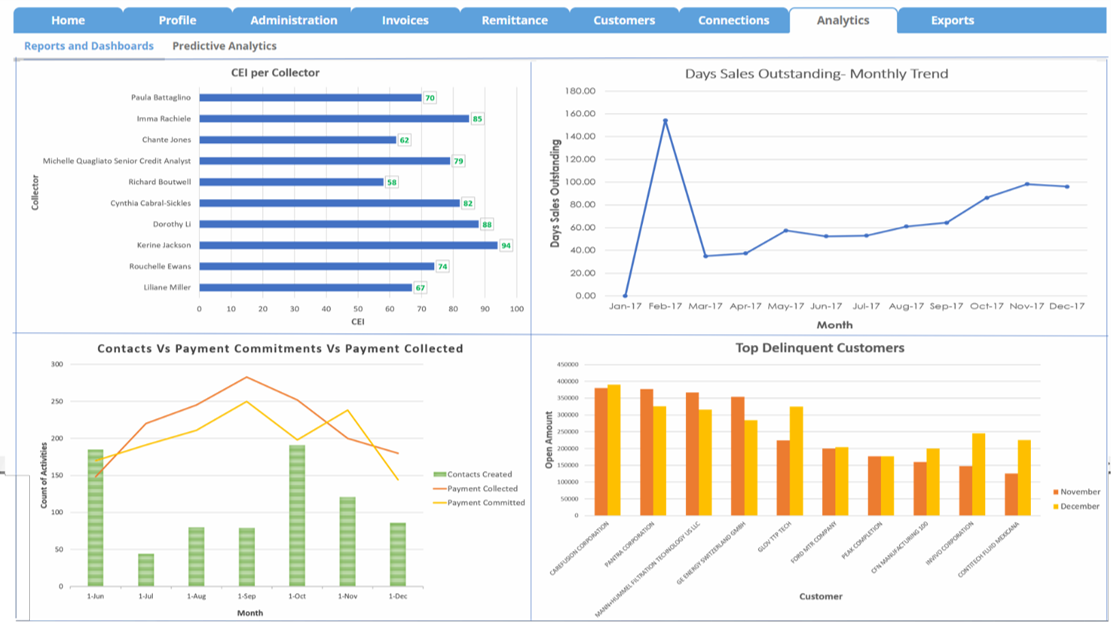
HighRadius is built for massive, global enterprises that need to manage collections across multiple countries and complex ERP setups. This platform uses a network of AI agents to predict exactly when a customer is likely to pay.
It handles the manual login loop by automatically pushing invoices to over 600 customer portals, saving your team from the tedious task of repetitive data entry. This automation brings order to the most chaotic, high-volume environments where manual oversight isn't an option anymore.
Key Features
- AI-driven worklists that automatically prioritize your collections based on a customer's real-time risk and propensity to pay
- Portal automation that uses RPA to upload invoices and track approval status across hundreds of AP portals without manual logins
- Integrated dispute management that flags issues early and routes them to the right team members for immediate resolution
- Predictive cash forecasting that analyzes years of payment behavior to give you a reliable look at future cash flow
Pricing
- Custom
Pros
- Processes millions of invoices for Fortune 500 companies without slowing down
- Reduces past-due accounts significantly through highly accurate payment predictions
- Includes a self-service portal that makes it much easier for customers to pay and view statements
Cons
- Implementation is a major project that typically takes time to go live
- The platform is very complex and can feel overwhelming for smaller teams with simpler needs
Best for: Global enterprises that need an optimal solution to manage massive volumes and complex global collections.
3. Chaser
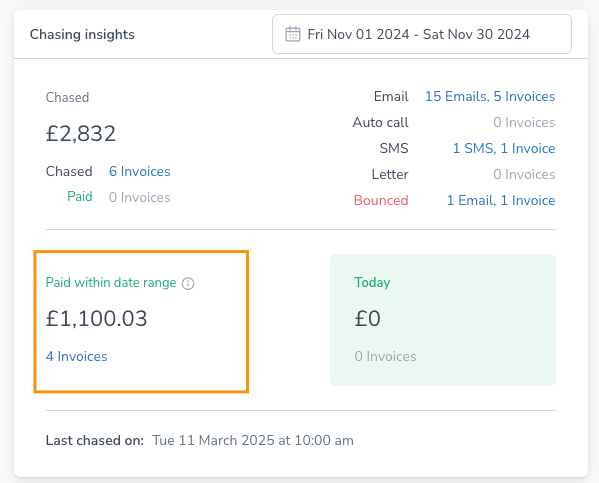
Chaser is a credit control tool for teams that want to get paid faster without losing a personal touch. It acts like a persistent assistant that follows up on all outstanding invoices according to a schedule you define.
Instead of sending robotic payment demands, it uses your own email address and signature. So, every nudge looks like a manual check-in from your finance team. This approach helps clear the backlog of small and mid-sized invoices that often sit unpaid.
Key Features
- Credit checking tools that let you see the financial health of a customer before offering terms
- A dedicated payment portal where customers can view their full statement and pay multiple invoices at once
- Automated thank-you notes that go out the moment a payment is reconciled to keep the relationship positive
Pricing
- Custom
Pros
- Connects to tools like Xero and QuickBooks in minutes with a very simple setup
- Maintains a friendly tone with customers through highly customizable templates
- Provides a clear timeline of every interaction so you never lose the history of a conversation
Cons
- Lacks the autonomous two-way conversational intelligence found in dedicated AI agents
- Reporting doesn't offer the deep predictive forecasting of enterprise platforms
Best for: Small to mid-sized B2B companies that need a simple way to automate credit control.
4. Billtrust
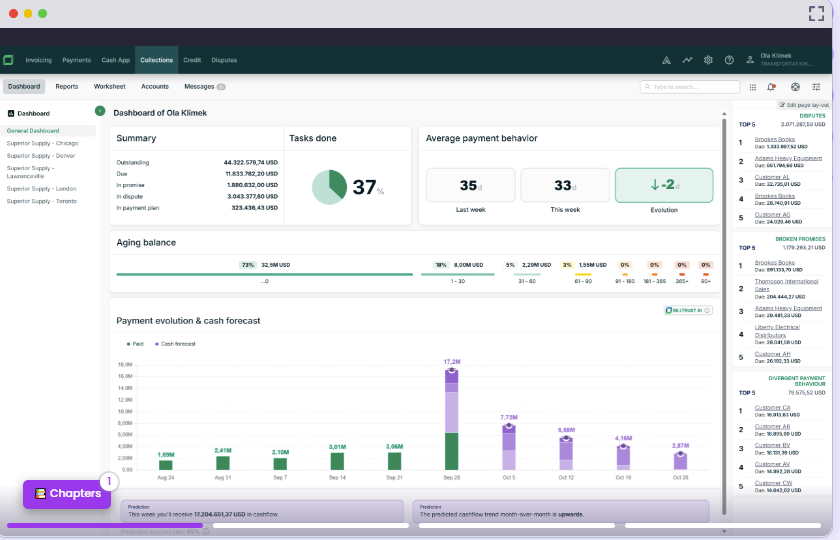
Billtrust is designed for large enterprises and distributors that need to handle massive invoice volumes without a proportional increase in headcount.
It acts as a bridge between your accounting system and over 260 different customer AP portals. This automatically pushes invoices and documents directly into your customers' preferred systems, eliminating the manual logins that usually bog down a collections team.
Key Features
- Agentic email tools that recognize customer tasks and suggest data-backed responses to resolve collection inquiries 10x faster
- A digital lockbox that captures and processes virtual cards and emailed remittances to speed up cash application
- Centralized dispute management that automatically tracks and pauses dunning for invoices
Pricing
- Starter: $0/month (0.3% fee on collected revenue)
- Pro: $200/month + 0.3% fee
- Enterprise: Custom pricing based on transaction volume and specific modules
Pros
- Reduces the time spent on manual data entry by automating nearly 90% of the payment matching process
- Provides a highly professional payment experience for customers through a branded self-service gateway
- Scales effectively for global organizations with complex, multi-entity accounting needs
Cons
- The comprehensive feature set can be overwhelming and unnecessarily complex for smaller businesses
Best for: Large-scale distributors and enterprises that need to automate invoice delivery to a high volume of customer portals.
5. Gaviti
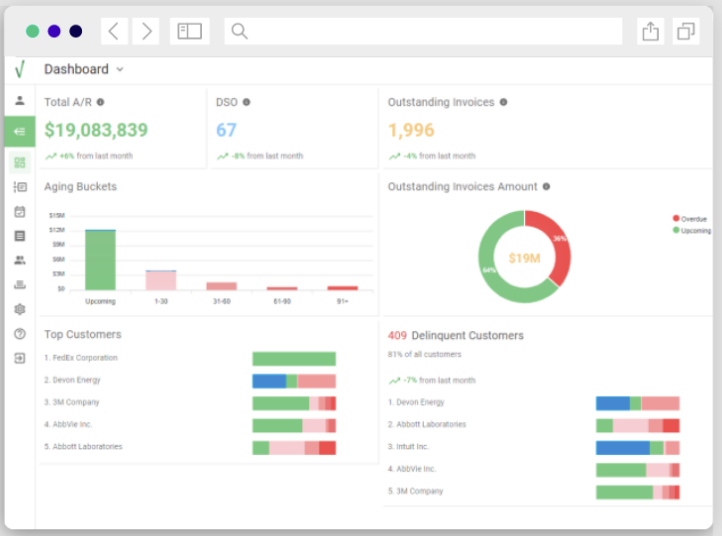
Gaviti is a collections management platform designed to sit on top of your existing ERP to speed up cash flow. It replaces the daily spreadsheet grind by giving your team a clear, prioritized list of which customers to contact each day.
Gaviti fills the gap between basic reminder tools and massive enterprise systems by providing a flexible workflow that grows as your customer base grows.
Key Features
- Smart collection playbooks that adjust the frequency and tone of reminders based on the age of an invoice
- A centralized communication hub that records every email and note so the whole team sees the same history
- Automated dispute management that flags contested invoices immediately to keep them from stalling your cash flow
Pricing
- Custom
Pros
- Connects with almost any ERP and older systems that usually lack modern automation
- Simplifies the daily workflow for collectors by showing which tasks have the highest impact on cash
- Keeps a clean audit trail of every interaction to help resolve long-term payment delays
Cons
- The reporting and analytics dashboards are less visual than some newer competitors
- Initial setup for a complex workflow requires some manual planning to get the timing right
Best for: Mid-market companies using older ERPs that need a reliable way to bring order to their collections without a total system overhaul.
6. Maxio
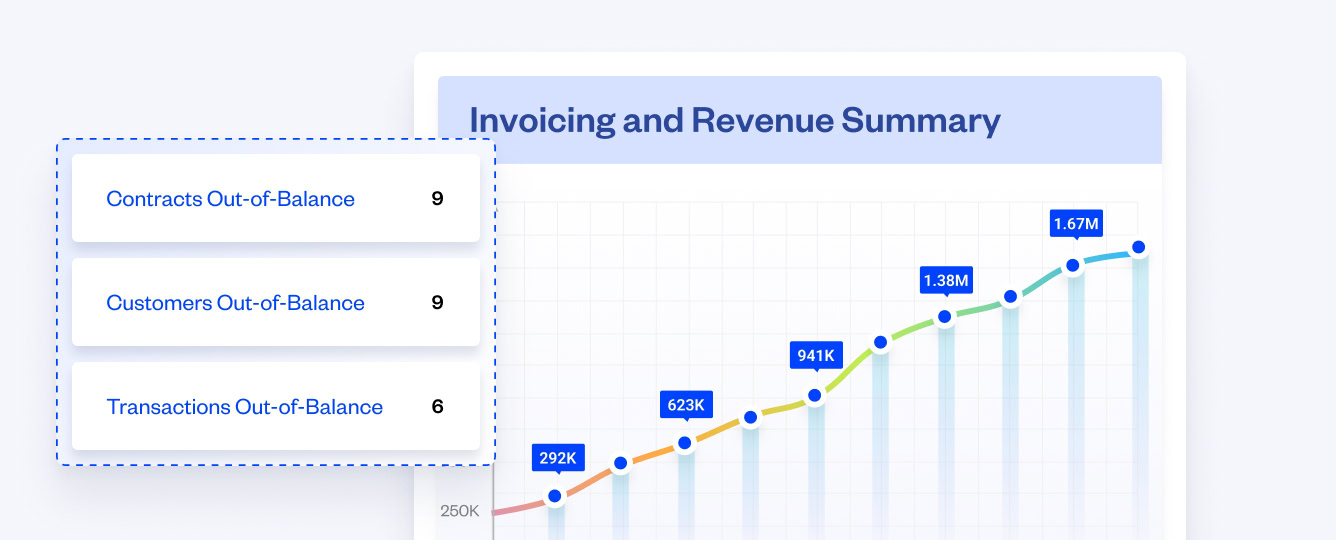
Maxio is built for B2B SaaS companies that need to manage subscription billing and collections in one place. It handles mid-month plan changes, usage-based fees, and renewals by linking billing data directly to collection workflows.
The tool ensures that when a subscription payment fails, the system immediately starts a tailored sequence based on the customer's plan and history.
Key Features
- Automated dunning cycles designed for SaaS that handle failed credit cards and ACH payments with grace periods
- Integrated subscription management that updates invoices when customers upgrade or downgrade mid-cycle
- Real-time SaaS metrics like MRR and churn that update as collections are processed
Pricing
- Grow: $599/month
- Scale: Custom
Pros
- Keeps billing and collections in a single system to avoid data lag
- Handles revenue recognition alongside the collection process
- Provides a straightforward way for SaaS customers to manage their own accounts
Cons
- The platform is very SaaS-focused, so it is a poor fit for traditional distributors or one-time service businesses
- Initial integration with your product's usage data can require some developer time
Best for: B2B SaaS companies that need to sync complex subscription billing with an automated collections workflow.
7. Upflow
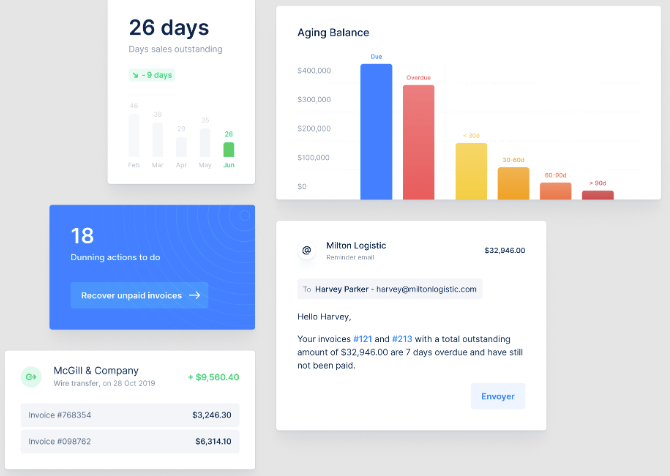
Upflow moves your team out of messy spreadsheets and into a refined workflow, making the payment process frictionless. It automates routine reminders, scaling your collections without sounding like a debt collector.
This accounts receivable collections software also provides customers with a dedicated, personalized portal to view all outstanding balances in a single click.
Key Features
- Tailored reminder schedules that look and feel like personal emails from your team
- Real-time analytics that provide an instant look at your aging balance and collection efficiency
- Native integrations with modern billing tools like Stripe and Chargebee
Pricing
- Custom
Pros
- Easy to set up and get running
- Provides a very clean, professional user experience for you and your customers
- Integrates directly with the modern tech stacks used by high-growth startups
Cons
- Lacks autonomous two-way conversation capabilities
- Reporting might be too basic for teams with multi-entity, global requirements
Best for: Growing B2B companies that want a user-friendly way to automate their reminders and provide a professional payment experience for their customers.
8. Quadient AR (formerly YayPay)
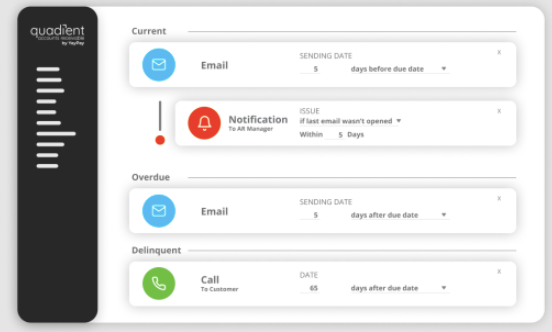
Quadient AR focuses on using historical payment data to predict future customer behavior. This platform gives your finance team a credit score for each customer based on how they actually pay, rather than just their official credit rating.
The accounts receivable collections tool allows collectors to prioritize their outreach based on actual risk. This shifts the focus from reactive chasing to proactive management, making it easier to maintain steady cash flow even in complex, multi-entity organizations.
Key Features
- Predictive payment behavior analytics that flag high-risk accounts based on shifting payment patterns
- Automated workflow prioritization that directs your team to the invoices most likely to result in a collection today
- A multi-language and multi-currency self-service portal that allows global customers to pay in their local tender
- Unified communication history that tracks every phone call, email, and internal note in a single audit trail
Pricing
- Custom
Pros
- Works well for international companies that need to manage collections across different regions and languages
- Integrates deeply with a wide range of ERPs, including Sage, NetSuite, and Intacct
- Reduces the time to payment by offering customers a simple digital checkout experience
Cons
- The interface can feel a bit data-heavy and takes some time for new users to master
- Customizing the automated workflows to fit very specific business rules can be a manual process
Best for: Mid-to-large-sized companies that need data-driven insights to manage credit risk and global collections.
9. Invoiced
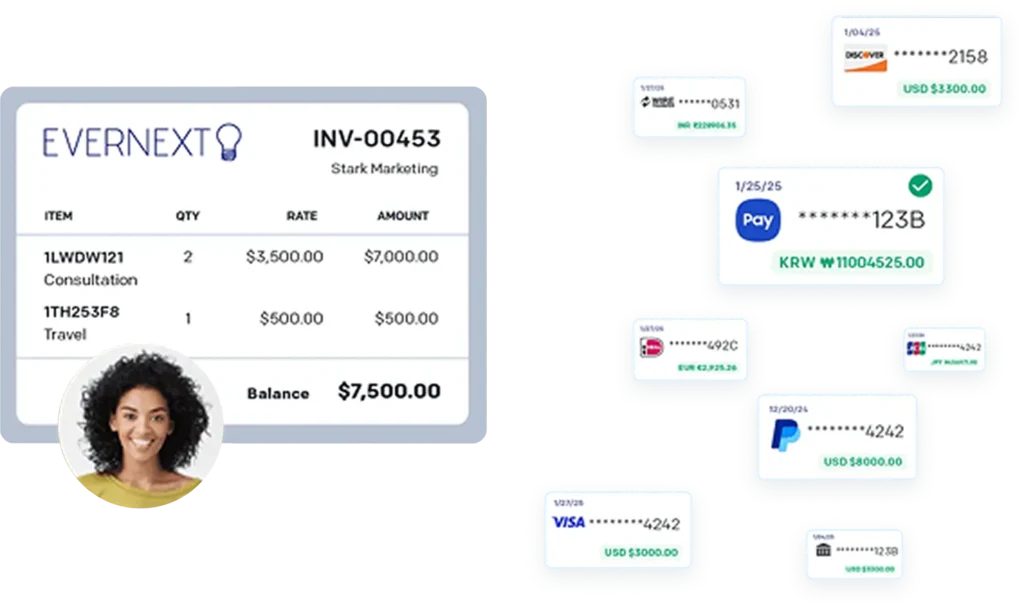
Invoiced functions as a bridge between your accounting software and your customers to simplify the cash collection cycle. It replaces manual email chains with a branded portal where clients view statements and pay via credit card, ACH, or wire. The system also uses cadences to send reminders across email, text, and even physical mail.
Key Features
- A branded self-service portal lets customers manage their own payment methods and settle open invoices without calling your office.
- Automated follow-up sequences reach customers via email, SMS, and mailed letters based on how long an invoice has been overdue.
- Handles recurring charges, usage-based fees, and mid-cycle plan changes without manual data entry.
- Its CashMatch matches incoming payments to open invoices to speed month-end closing.
Pricing
- Custom
Pros
- Handles both one-time service fees and complex recurring subscriptions in one place.
- Implementation is fast, with native sync for QuickBooks, Xero, and NetSuite.
- Provides a one-click checkout experience for the customer.
- Professionalizes the collections process without requiring a massive enterprise budget.
Cons
- Phone support is typically reserved for higher-level accounts.
- Reporting lacks an easy way to generate custom days overdue reports without manual exporting.
Best for: Growing mid-market companies that need a polished, customer-facing billing experience.
10. Esker
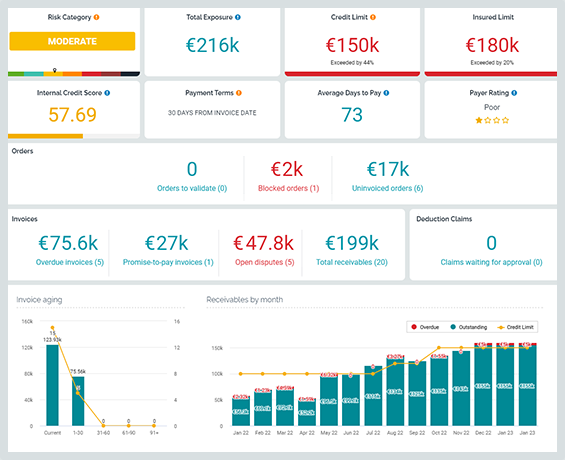
Esker is a global platform built for mid-to-large organizations that need to manage high volumes of invoices across different countries. It handles the entire accounts receivable cycle, from initial credit checks to payment matching.
A standout feature is its support for both digital and paper-based workflows, making it a reliable choice for businesses with a customer base that isn’t yet fully digital.
Key Features
- A physical mail network handles printing and sending paper invoices to customers who don't use digital portals.
- The credit management tool monitors customer risk levels and provides data to help set or adjust credit limits.
- The customer portal supports local payment methods and over 130 currencies for international collections.
- Cash application tools match incoming payments with open invoices even when remittance data is messy or missing.
Pricing
- Custom
Pros
- The ideal choice if you still have many customers who require physical mail or faxes.
- Built for global scale, easily managing different tax regulations and multi-entity accounting.
- Covers the entire invoice-to-cash process, not just collections.
Cons
- The setup and integration phase is often long and usually requires a dedicated internal team to manage.
- Some reporting features and dashboards take a longer time to load during peak periods.
Best for: Large international enterprises and distributors that need to manage high-volume global billing through digital and physical channels.
11. Tesorio
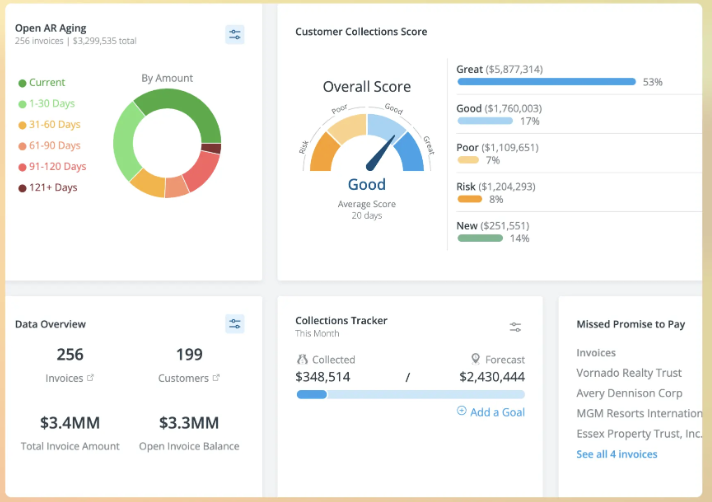
Tesorio is built to connect your account collection activity directly to your daily cash position. It pulls data from your ERP and CRM to show exactly how much cash is coming in and when it will hit your bank account.
This accounts receivable collections software also uses historical customer behavior to forecast pay dates and pinpoint which accounts need a nudge to help you meet monthly liquidity targets. Such focus keeps the collections team aligned with the company’s broader goals for working capital and cash flow.
Key Features
- Cash flow forecasting predicts actual pay dates based on how specific customers have behaved in the past.
- A centralized workspace enables sales and finance to share notes and updates on problematic accounts in real time.
- Automated dunning allows you to send personalized follow-up batches to multiple customers at once.
- Reporting dashboards show the immediate impact of collection efforts on your overall cash flow and DSO.
Pricing
- Custom
Pros
- The forecasting is more accurate than basic ERP tools because it considers payment trends rather than just due dates.
- The interface is clean and easier to navigate.
- Highly scalable for companies experiencing rapid increases in transaction volume.
Cons
- Initial syncing with certain older ERPs can sometimes result in data gaps that require manual troubleshooting.
Best for: Mid-market and enterprise finance teams that want to use collections data to drive accurate cash flow forecasting.
The Strategic Shift to Automated Collections
Sticking to manual follow-ups is no longer a viable strategy; it is a direct drain on your company’s liquidity.
Transitioning to an accounts receivable collections software eliminates administrative delays that stall payments and mask your true cash position.
Whether you are managing a growing portfolio or a complex global ledger, the goal is a predictable bank balance. By automating the routine correspondence that previously required hours of manual work, your team can finally focus on high-level financial strategy.
Ready to start scaling?
Get started with Lunos to see how our AI agents can automate your collections workflow today.
Make your receivables effortless and focus on what you do best